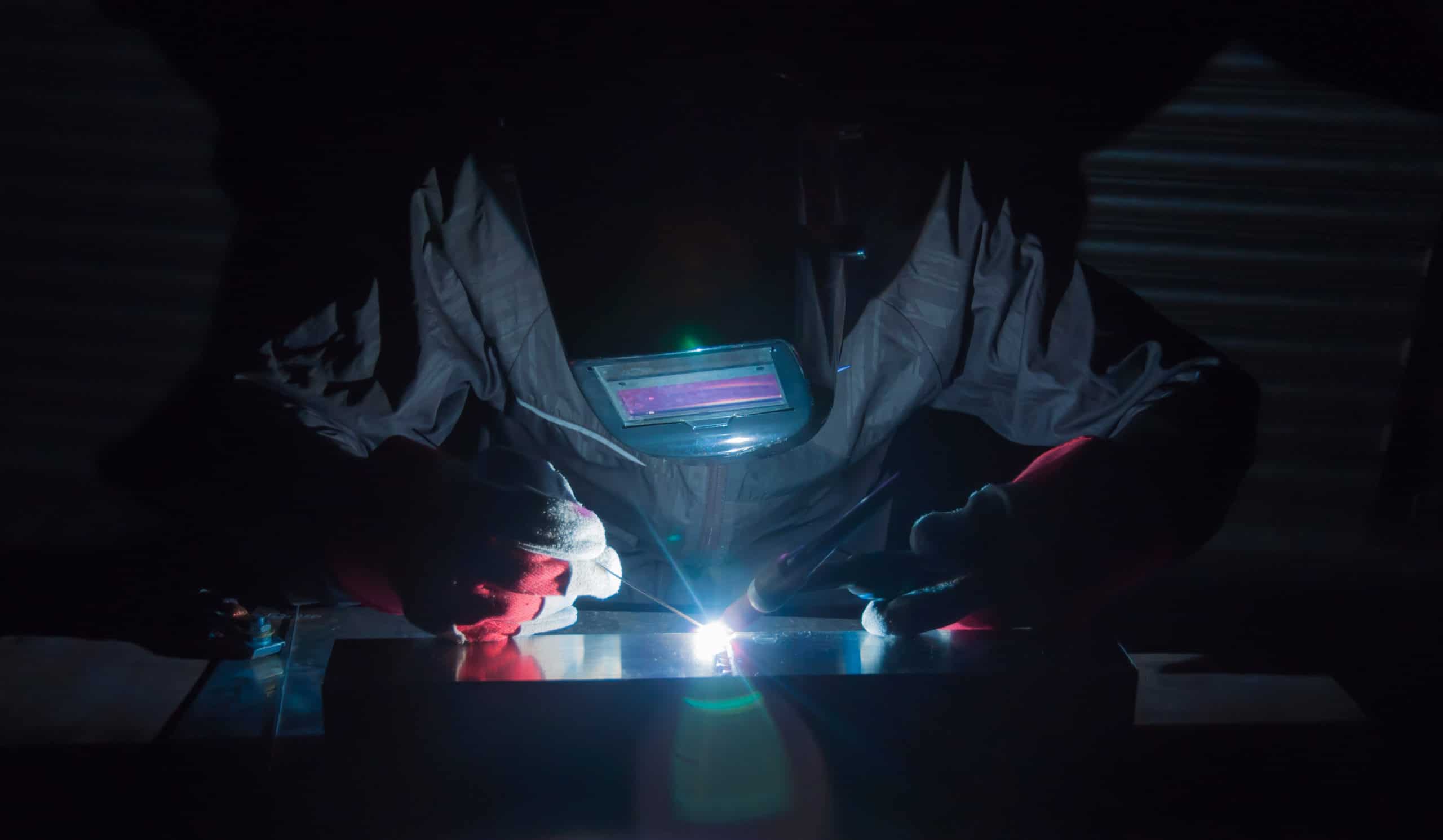
Welding fumes and airborne contaminants represent some of the most critical long-term health and environmental risks on the modern welding shop floor. Inhaling hazardous metal oxides, shielding gases, and microscopic airborne particles can cause short-term conditions such as metal fume fever, while prolonged exposure leads to irreversible, life-altering occupational health problems.
Because welding releases fine metal particles and gases into the air, understanding and controlling these hazards is an essential part of protecting workers from welding fume exposure.
Effective hazard management therefore requires a comprehensive approach that addresses airborne contaminants throughout the welding process. And at Inelco Grinders, our particular focus is on controlling the fine particles generated during tungsten electrode preparation. This guide covers source-capture ventilation, personal protective equipment (PPE), and the critical yet frequently overlooked airborne hazards introduced during material and electrode preparation.
Myth vs. Reality: Do Medical Masks Protect Against Welding Fumes?
A common and very dangerous misconception is that wearing a standard surgical or medical mask provides adequate protection against welding fumes. They do not, and relying on them can put workers’ health at risk.
Medical masks are designed primarily to protect against large droplets and fluid splashes. They do not provide any facial seal and zero respiratory protection against fine welding fumes or toxic airborne particulates. Therefore, relying on a medical mask leaves welders completely exposed to hazardous air contaminants.
Understanding the Hazards of Welding Fume Inhalation
When welding generates intense heat, some of the base and filler metals vaporize. They become fine airborne particles mixed with gases.
The chemical composition of welding fumes depends on the base materials, surface coatings, filler metals, and welding processes used.
Major Components of Welding Fumes
- Hexavalent Chromium: Welding stainless steel and nickel alloys generates hexavalent chromium. A toxic substance recognized by carcinogenic health studies.
- Manganese: Found in carbon steels and filler wires, long-term manganese exposure affects the central nervous system, leading to neurological symptoms similar to Parkinson’s disease.
- Zinc Oxide & Metal Fume Fever: Welding galvanized steel releases zinc oxide fumes that trigger metal fume fever. This is a flu-like illness causing chills, fever, nausea, and severe fatigue.
- Toxic Coatings & Primers: Heating paints, cadmium plating, rust inhibitors, or degreasers releases toxic chemical vapors. Thorough mechanical cleaning prior to welding is essential.
Implement Source-Capture Local Exhaust Ventilation (LEV)
Managing fume hazards starts with controlling contaminants close to their point of origin, before they reach the operator’s breathing zone.
- Local Exhaust Ventilation (LEV): Extraction arms, booths, and downdraft tables capture welding fumes directly at the weld pool. Position extraction equipment according to workplace risk assessments.
- General Shop Ventilation: Roof fans and fresh-air systems dilute general shop air, but should never replace direct source capture.
- Airflow Positioning: Welders must position their bodies so cross-ventilation pulls rising fumes away from their face and chest.
Standardize Certified Respiratory Protective Equipment (RPE)
When engineering controls cannot completely eliminate airborne contaminants, certified respiratory protection must be enforced based on workplace risk assessments. Selecting the right protection depends on the specific workshop application:
- Source-Capture LEV: Ideal for fixed welding bays and tables with low to high exposure, capturing fumes before they reach the breathing zone.
- PAPR Systems (P3): Essential for heavy production and stainless steel welding with high exposure, delivering a continuous clean positive air supply.
- Enclosed Wet Grinding: Necessary for TIG electrode preparation due to critical dust risks, providing 100% dust containment through liquid cooling.
Address the Overlooked Hazard: Tungsten Grinding Nanoparticles
A major gap in many shop safety plans is treating arc fumes as the only airborne threat.
During TIG welding setup, grinding tungsten electrodes on conventional open belt or bench grinders will release fine airborne particles that may pose a respiratory risk. Standard welding fume extraction systems may not effectively capture these particles at the source.
- The Nanoparticle Threat: Air measurements taken 40 cm from open grinders show a massive spike in dangerous nanoparticles. Because nanoparticles cannot be excreted by the body due to their size and shape, instead they lodge permanently in lung tissue and penetrate the bloodstream.
- Irreversible Chronic Diseases: Inhaling fine particles causes pneumoconiosis (chronic lung scarring) with symptoms like persistent cough, chest pain, and shortness of breath. It is important for welders to know that this disease has no known medical cure.
- Eye & Physical Injuries: Open grinding projects metal filings causing skin burns, eye edema, and siderosis bulbi (sight-threatening iron diffusion in the eye). Open wheels also carry high risks of severe hand injuries and disc disintegration.
Did you know? The invisible particle threat
- Health impact: Particles lodge permanently in lung tissue, causing incurable pneumoconiosis.
- Air spikes: Open belt grinding increases air particle counts massively at a distance of just 40 cm.
- The solution: Enclosed wet grinding traps 100% of particles in liquid before they disperse.
The Modern Solution: Enclosed Wet-Grinding & ESG Integration
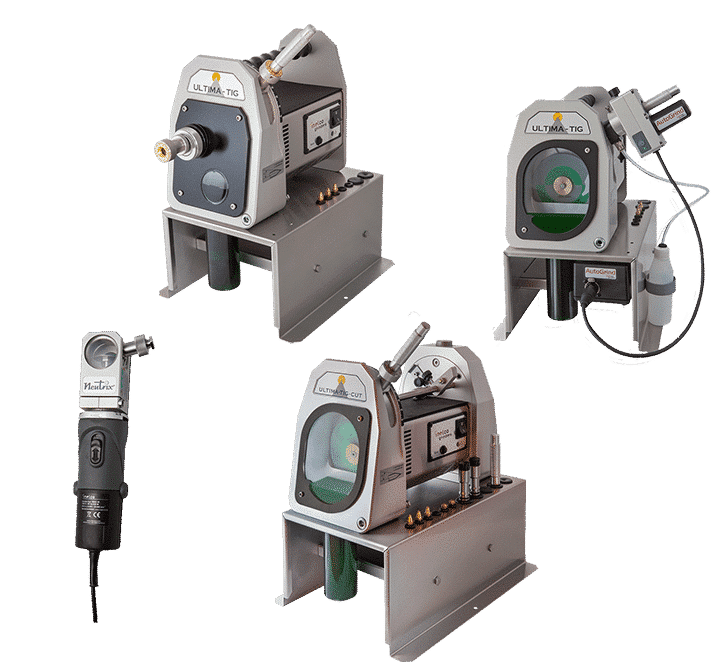
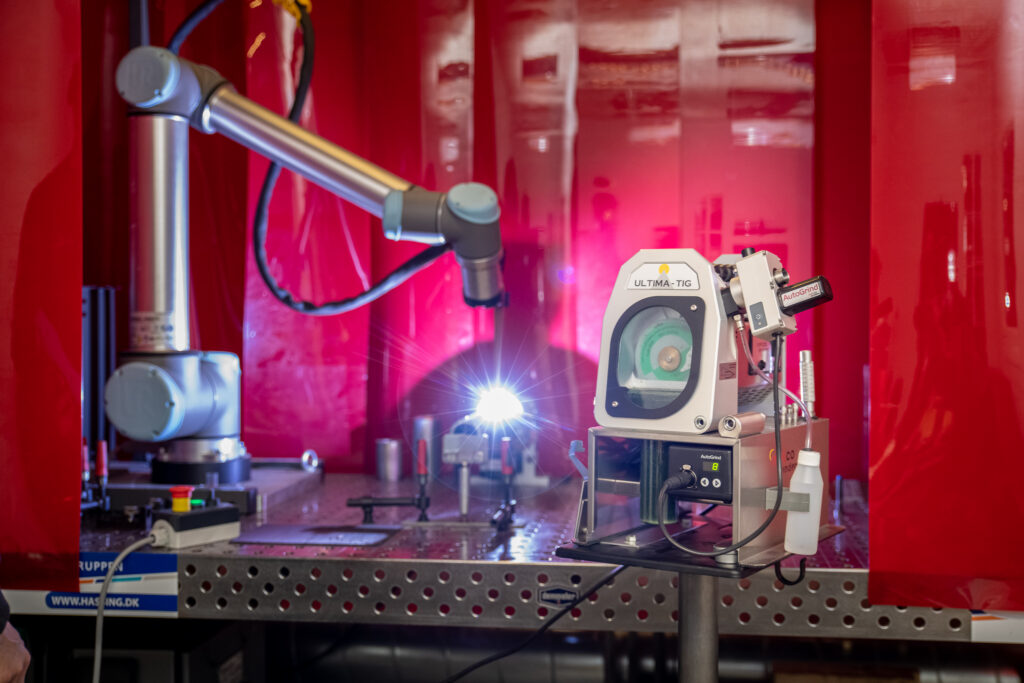
To eliminate airborne particles and elevate health standards, leading industrial facilities and technical training institutes are replacing open dry grinding with enclosed wet-grinding systems like the Ultima-TIG®.
- 100% Dust Containment: Liquid cooling traps 100% of fine particles inside a sealed grinding chamber. This completely prevents airborne dust dispersion and eliminates the inhalation risks.
- Safe Electrode Holders: Ergonomic holders eliminate hand injuries and allow electrodes to be ground safely down to 8 mm, which reduces expensive Tungsten electrode waste by up to 50%.
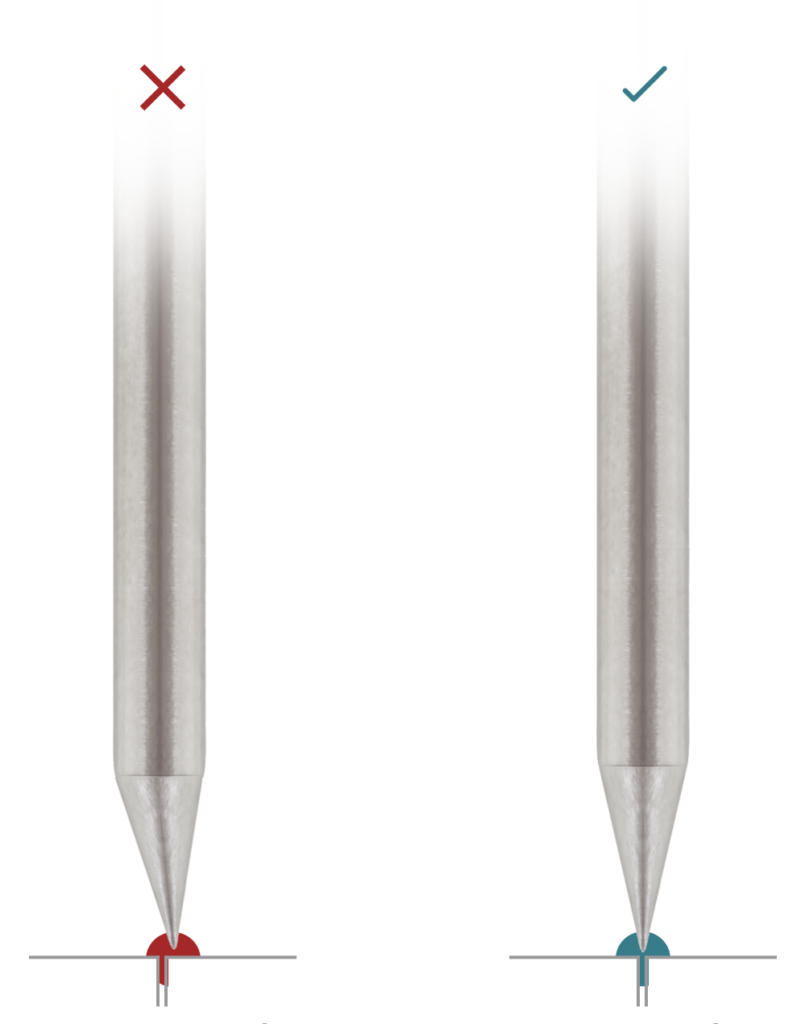
- Truncated Tip Precision: Wet grinding enables a precise, truncated (flat) tip that stabilizes the arc, prevents weldpool contamination at high amperages, controls the Heat-Affected Zone (HAZ), and extends electrode lifespan.
- Circular ESG Sustainability: Sealed dust collectors and electrode ends can be returned to distributors or Inelco Grinders at zero cost in Europe for 100% recycling into new industrial tools and aviation components.

ESG & circular economy at a glance
- Zero waste: Return full dust collectors for 100% raw material recycling.
- Recycled materials: Collected tungsten dust is repurposed for aviation and electronics parts.
- Resource efficiency: The combination of the electrode holder, precise grinding, and the ability to grind electrodes down to a length of just 8 mm delivers the cost savings.
Conclusion: Holistic Safety Combines Fume Control and Tooling Engineering
Successfully managing airborne hazards requires controlling them at every stage of the welding process.
Welding fumes should be captured at the source using effective ventilation, while certified respiratory protection provides additional protection for workers.
Tungsten Electrode preparation also needs to be controlled, as dry grinding will release fine tungsten particles into the air.
Replacing open dry grinding with dedicated enclosed wet-grinding equipment helps contain these particles and creates a safer, more controlled working environment. It can also reduce tungsten waste and material costs while supporting more sustainable workshop practices.
By implementing a comprehensive hazard management strategy, facilities can:
- Capture toxic welding fumes directly at the source
- Prevent open-wheel hand injuries, eye damage, and disc disintegration
- Grind short electrodes down to 8 mm, reducing tungsten consumption
- Achieve superior TIG arc stability and weld pool consistency through truncated tips
- Support workplace health, safety, and circular ESG sustainability requirements
Continue reading more about TIG Welding Advantages.