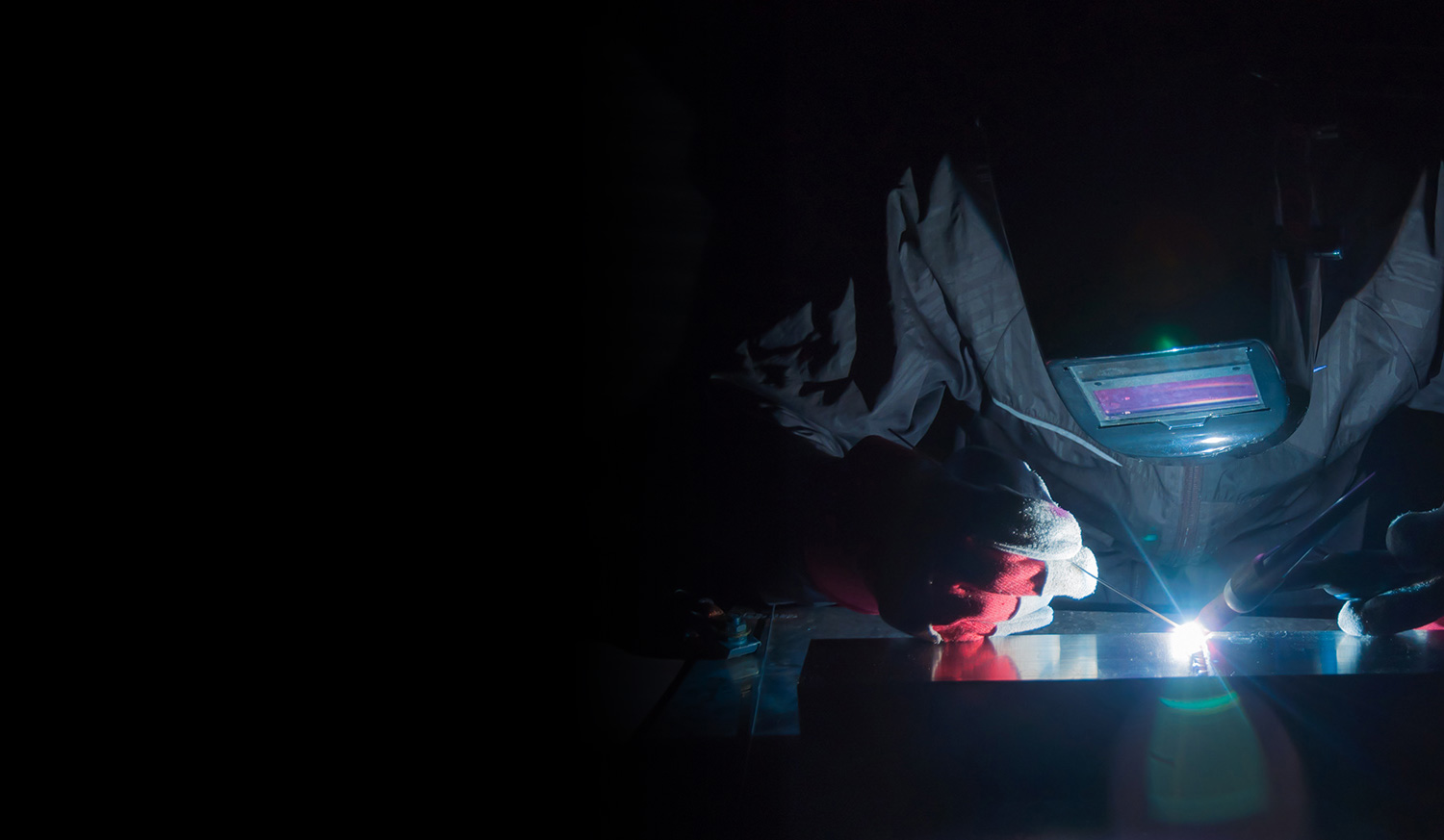
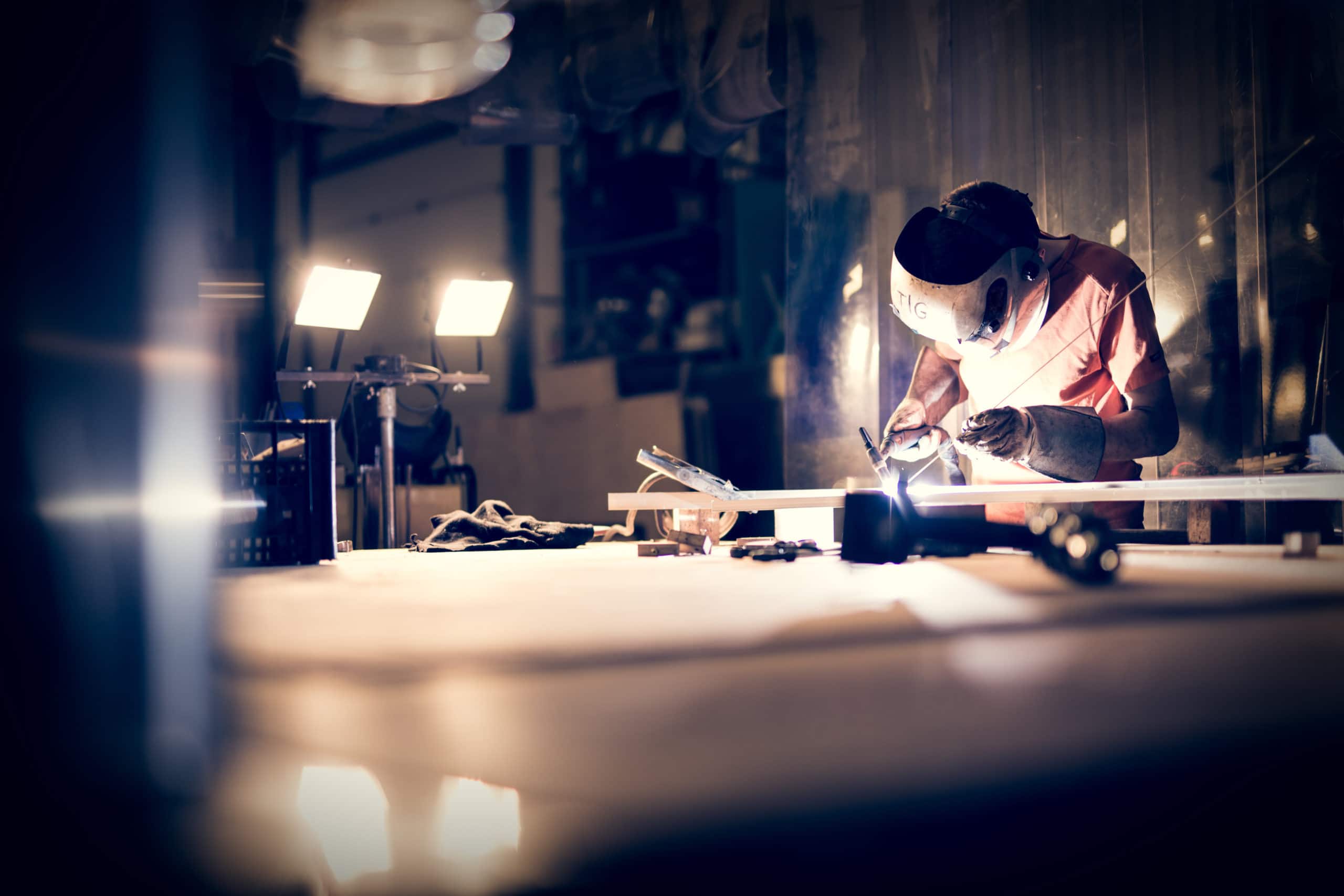
When high quality, aesthetic appeal, and structural integrity are paramount, Tungsten Inert Gas (TIG) welding, also known as Gas Tungsten Arc Welding (GTAW), is a preferred process for high-quality, precision-critical applications.
TIG welding is widely used for aerospace components, automotive exhaust systems, food-grade piping, and artistic metalwork, where accuracy is required. TIG welding can produce clean, precise, and high-quality welds that are difficult to achieve with other welding processes.
However, achieving the full benefits of TIG welding requires more than just high-end power sources. It relies heavily on optimal torch setup, precise arc geometry, and proper electrode preparation. At Inelco Grinders, our expertise is Tungsten electrode preparation, therefore we know exactly how a TIG should be set up for the best overall welding results.
Below, we explore the primary advantages of TIG welding and how to maximize your welding performance.
Superior Weld Quality and Aesthetics
One of the most significant reasons fabricators choose TIG is the exceptional cleanliness and appearance of the final weld bead.
- No Slag or Spatter: Unlike Stick (SMAW) or flux-cored welding (FCAW), TIG welding produces zero slag and virtually no spatter. This reduces time-consuming post-weld grinding, chipping, or polishing.
- Flawless Finish: The continuous, highly controlled arc produces smooth, visually appealing welds. This is indeed suitable for exposed architectural work and strict sanitary standards in pharmaceutical or food processing industries.
Unmatched Precision and Heat Control
TIG welding uses a non-consumable Tungsten electrode to create the arc while an inert shielding gas (typically Argon) protects the weld pool. This setup provides precise control over heat input.
- Delicate and Thin Materials: Fine control over amperage, often managed through a foot pedal or torch control, allows welders to work on extremely thin sheet metals without warping or burning through.
- Targeted Heat Zone: The narrow, concentrated arc ensures that heat is focused exactly where needed, which minimizes the Heat-Affected Zone (HAZ) and reduces material distortion.
For a comprehensive overview of workshop safety protocols and protective gear, see our guide on Welding Safety Rules.
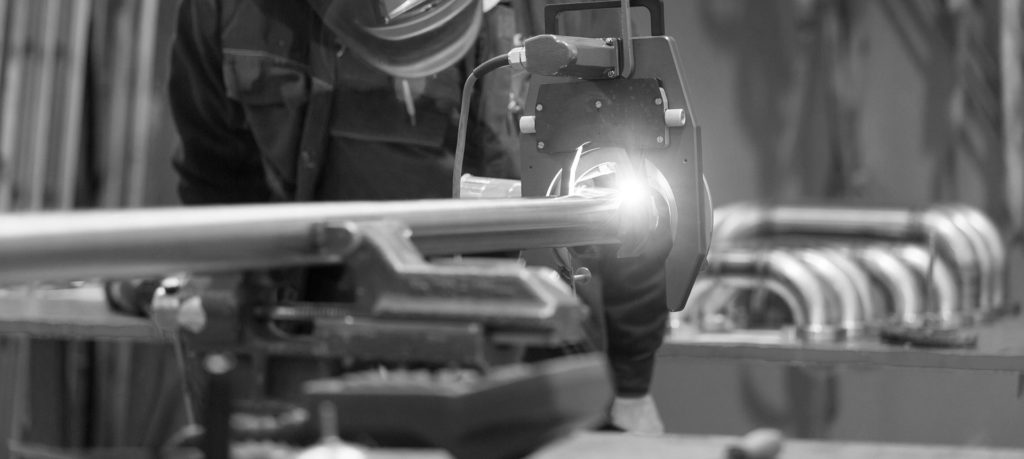
Exceptional Versatility Across Metals
TIG welding can join a wider variety of metals and alloys compared to almost any other process.
- Wide Material Compatibility: TIG welding can be used on a wide range of metals and alloys, including aluminum, magnesium, copper, stainless steel, carbon steel, nickel, titanium, and other specialized materials.
- Autogenous Welding: TIG allows you to weld certain joints without using a filler rod. This is particularly useful for tight-fitting joints and thin materials, where precise heat control and a clean finish are important.
Unlocking TIG’s Full Potential: The Role of Electrode Geometry
While TIG welding offers incredible advantages, it is also a skill-intensive and sensitive process. A single flaw, such as electrode contamination, uneven tip angles, or radial grinding scratches, disrupts arc stability, causes tungsten inclusions, and leads to costly weld defects.
To consistently achieve top-tier welds, Tungsten electrode preparation must be standardized. This is the exact problem our grinders are made to solve:
- Longitudinal Grinding for Arc Stability: For consistent TIG arc performance, tungsten electrodes should be ground longitudinally (lengthwise), rather than radially. Longitudinal diamond grinding directs the electric current in a straight line to the tip, which produces a focused arc that does not wander.
- Repeatable Tip Angles & Truncated Geometry: Different applications require specific tip angles (from 15° to 180°). Utilizing a truncated (flat) tip geometry prevents the extreme point from melting into the weld pool at high amperages. This extends the tip life and also ensures predictable penetration.
Technical spotlight: why tip geometry controls weld quality
- Predictable arc profiles: Electrode angle influences arc characteristics, penetration, and weld width. Consistent grinding therefore helps produce predictable welding results.
- Truncated flat tip: Flattening the extreme tip point stabilizes current density and prevents tungsten transfer into the weld pool.
- Repeatability: Automated angle selection guarantees identical weld profiles across multiple welding bays and shift changes.
Standardized Electrode Preparation with Enclosed Wet Grinding
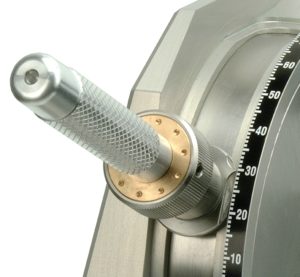
Manual electrode preparation on conventional bench grinders leads to uneven geometries, electrode overheating, and severe material loss. That’s why we built the Ultima-TIG®, a dedicated, enclosed wet-grinding system that automates precision while protecting the shop floor.
Validated by industry educational leaders
Technical training institutes, such as Germany’s Handwerkskammer Heilbronn-Franken, enforce closed wet-grinding technology in their TIG training programs. Standardizing electrode grinding ensures trainees achieve exact geometric repeatability and optimal arc control while maintaining a pristine workshop environment.
- Exact angle consistency: Sealed liquid-cooled grinding wheels maintain exact degree settings without overheating or weakening the tungsten structure.
- Reduced contamination: Diamond wet grinding helps reduce the risk of tungsten contamination and tip break-off in critical weld joints.
Economic advantage: reducing tungsten electrode waste by 50%
- Short-electrode clamping: Specialized electrode holders allow tungsten to be ground safely down to just 8 mm.
- Eliminating stubs: Traditional hand-grinding leaves unusable 30–40 mm tungsten stubs that are discarded as waste.
- Cost savings: Maximizing electrode utilization directly cuts expensive alloy electrode consumption by up to half across high-volume production lines.
Conclusion: Is TIG Welding Worth It?
TIG welding is a preferred choice for high-precision applications where weld quality and joint integrity are critical.
However, achieving consistent results requires more than skilled welding technique. Proper tungsten electrode preparation is equally important, as the condition and shape of the electrode directly affect arc stability, weld consistency, and tungsten consumption.
By combining good welding practices with precise electrode preparation, workshops can improve weld quality, reduce setup time, and make better use of tungsten electrodes.
Optimizing your TIG welding process with dedicated wet-grinding equipment, can help facilities achieve:
- Superior arc stability and repeatable penetration depth
- Clean, high-quality welds with zero spatter and reduced risk of tungsten inclusions
- Up to 50% reduction in Tungsten electrode consumption.
- Full alignment with modern shop efficiency, health, and precision standards
At Inelco Grinders we built the Ultima-TIG® to turn tungsten preparation from an overlooked manual step into a standardized, repeatable part of your TIG process.
If inconsistent arcs, wasted tungsten, or unpredictable weld quality are costing you time on the shop floor, it’s worth seeing what one of our dedicated grinding setups can do. Explore our full product selection.