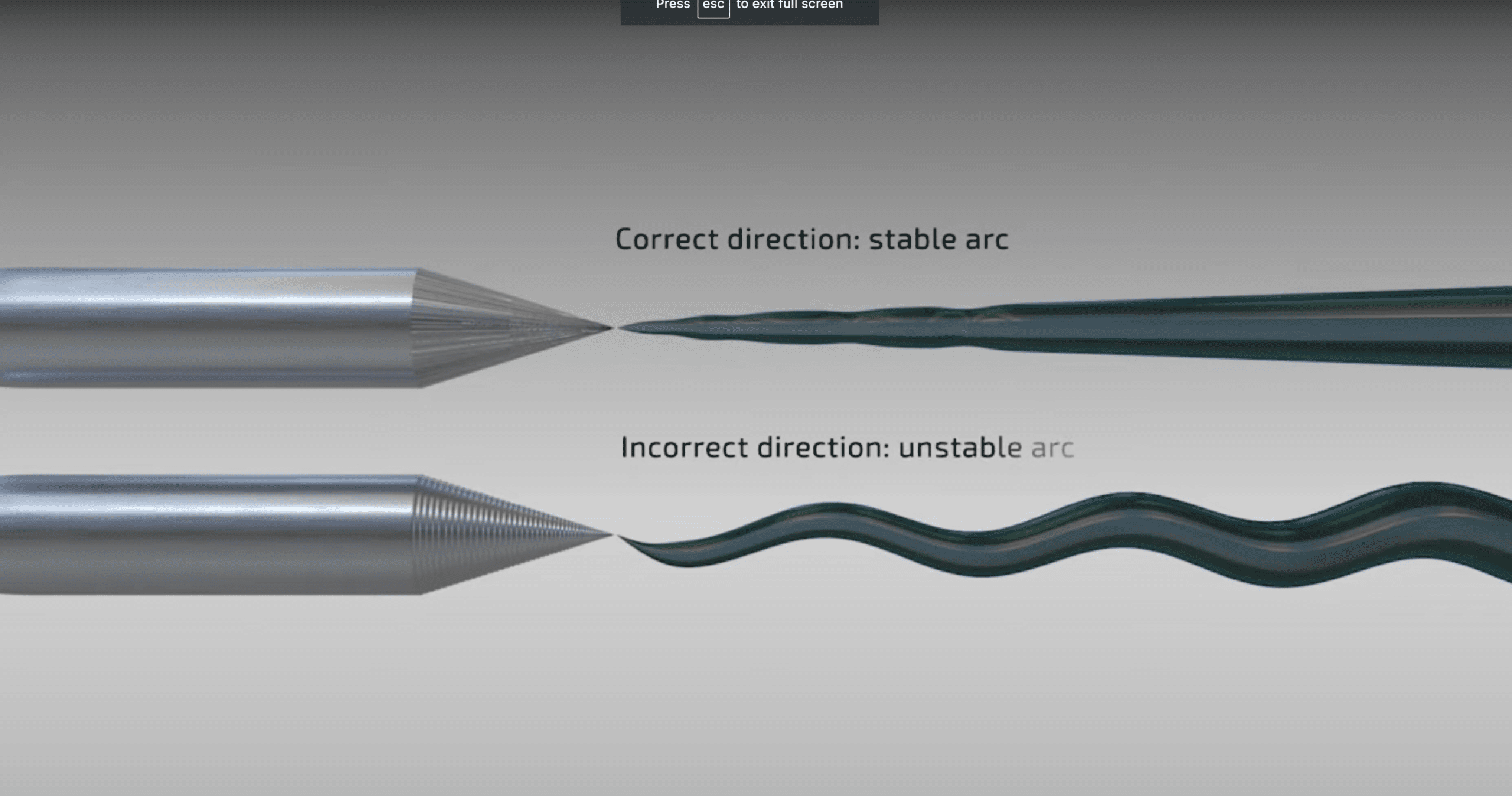
Consistent tungsten electrode preparation supports reliable TIG welding. Although an open belt or bench grinder might offer a convenient way to sharpen electrodes, you will experience that freehand grinding makes tip geometry and material removal much harder to control. With a dedicated tungsten grinder such as the Ultima-TIG®, you will be provided with controlled angle adjustment, electrode positioning and enclosed wet grinding.
This article compares open belt and bench grinding with our Ultima-TIG® grinder. We’ll specifically focus on explaining electrode consumption, preparation time and dust control further.
The Problem with a Standard Bench Grinder for Tungsten
A standard bench grinder tungsten setup lacks the dedicated controls needed for repeatable electrode preparation. The results depend on the abrasive, electrode orientation and operator technique. Grinding freehand introduces three common problems, and we’ve listed them down below.
- Grinding direction: Incorrect electrode positioning can produce grooves around the tip rather than along its length. These circumferential grooves can contribute to arc wander and unreliable ignition.
- Inconsistent geometry: Without an angle guide or electrode holder, operators can struggle to reproduce the same tip angle and shape. These variations affect weld repeatability. For related preparation guidance, see our post on maintaining top-notch Tungsten grinding results.
- Dust exposure: Open grinding without effective dust controls can release fine particles into the workshop air. Read more about the risks in our overview of Tungsten electrodes’ impact on health & safety.
General-purpose grinders can in fact sharpen an electrode, but repeatable preparation requires control over grinding direction, tip geometry and material removal.

Tungsten Electrode Precision
If you want to achieve the required tip geometry by hand, it takes both time and a good skill-set. Correcting an uneven angle or off-centre tip removes additional material, and it also shortens the electrode’s usable life.
Our grinding whitepaper cites approximately 1-2 mm of material loss per manual regrind. Actual removal depends on the electrode’s condition, the required geometry and the operator’s technique.
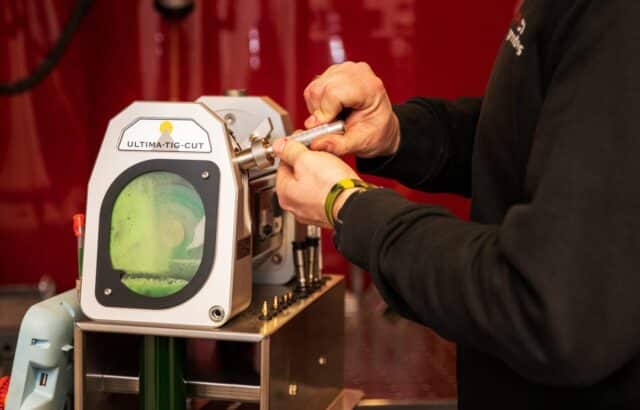
The Ultima-TIG® uses adjustable angle settings and an electrode clamping system to make preparation more repeatable. By controlling the geometry you reduce unnecessary corrective grinding and help operators retain more usable electrode material.
Tungsten Electrode Price and Material Waste
Regrinding is an operating cost, even when operators use equipment already on the workshop floor. Alongside labour and preparation time, the tungsten electrode price determines the cost of replacing material lost during grinding.
Small losses accumulate when a welding team prepares electrodes repeatedly throughout the working day. As the tungsten electrode price increases, the same amount of unnecessary material removal costs more.
The Ultima-TIG® helps control removal through repeatable electrode positioning and angle adjustment. It reduces overgrinding, although every regrind still requires some material removal.
Use our Tungsten electrode savings calculator to estimate the potential cost difference for your operation. Base the calculation on your own electrode consumption, purchase costs and grinding frequency.
Reducing Waste and Improving Efficiency
Inconsistent preparation can leave operators correcting tip geometry before returning to welding. A controlled longitudinal grind supports reliable ignition and arc stability, helping reduce interruptions caused by poor electrode preparation.
Short electrodes present another source of waste. Operators may discard them because they are difficult to hold securely during freehand grinding.
The Ultima-TIG® electrode holder supports grinding shorter electrodes within the machine’s specified limits. This allows workshops to use more of each electrode and helps limit the impact of tungsten electrode price increases.
Controlling Grinding Dust
Open belt and bench grinding can release airborne dust when adequate containment or extraction is absent. The exposure risk depends on the electrode composition, the amount of dust generated and the controls in place.
The Ultima-TIG® combines wet grinding with an enclosed chamber and a collection container to help contain grinding particles. Operators must still follow the equipment instructions for handling grinding residue and maintaining the system.
We also offer a collection of eligible filled dust containers and electrode residues for recycling. Availability depends on your location and shipment weight. You can contact us to confirm the applicable collection requirements.
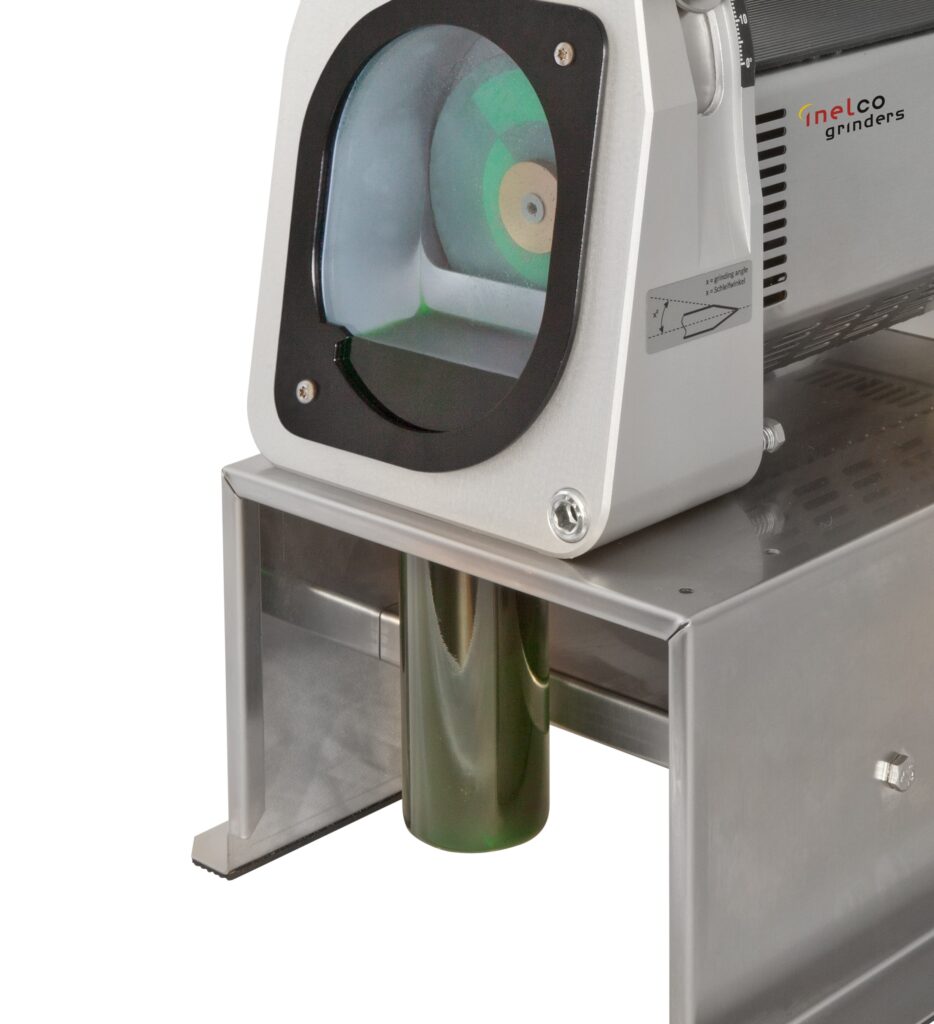
A Controlled Process for TIG Welding
Freehand grinding can add preparation time and increase electrode consumption when operators need repeated attempts to achieve the required geometry. Open equipment also requires effective controls to manage grinding dust.
The Ultima-TIG® grinder helps workshops improve electrode preparation through:
- Repeatable tip angles and electrode positioning.
- Reduced material loss from corrective grinding.
- Greater use of short electrodes.
- Enclosed wet grinding and dust collection.
For shop managers and procurement teams, the purchasing decision should account for electrode consumption, operator time and dust management alongside the equipment cost.
Contact us to discuss how the Ultima-TIG® could improve electrode preparation in your workshop.