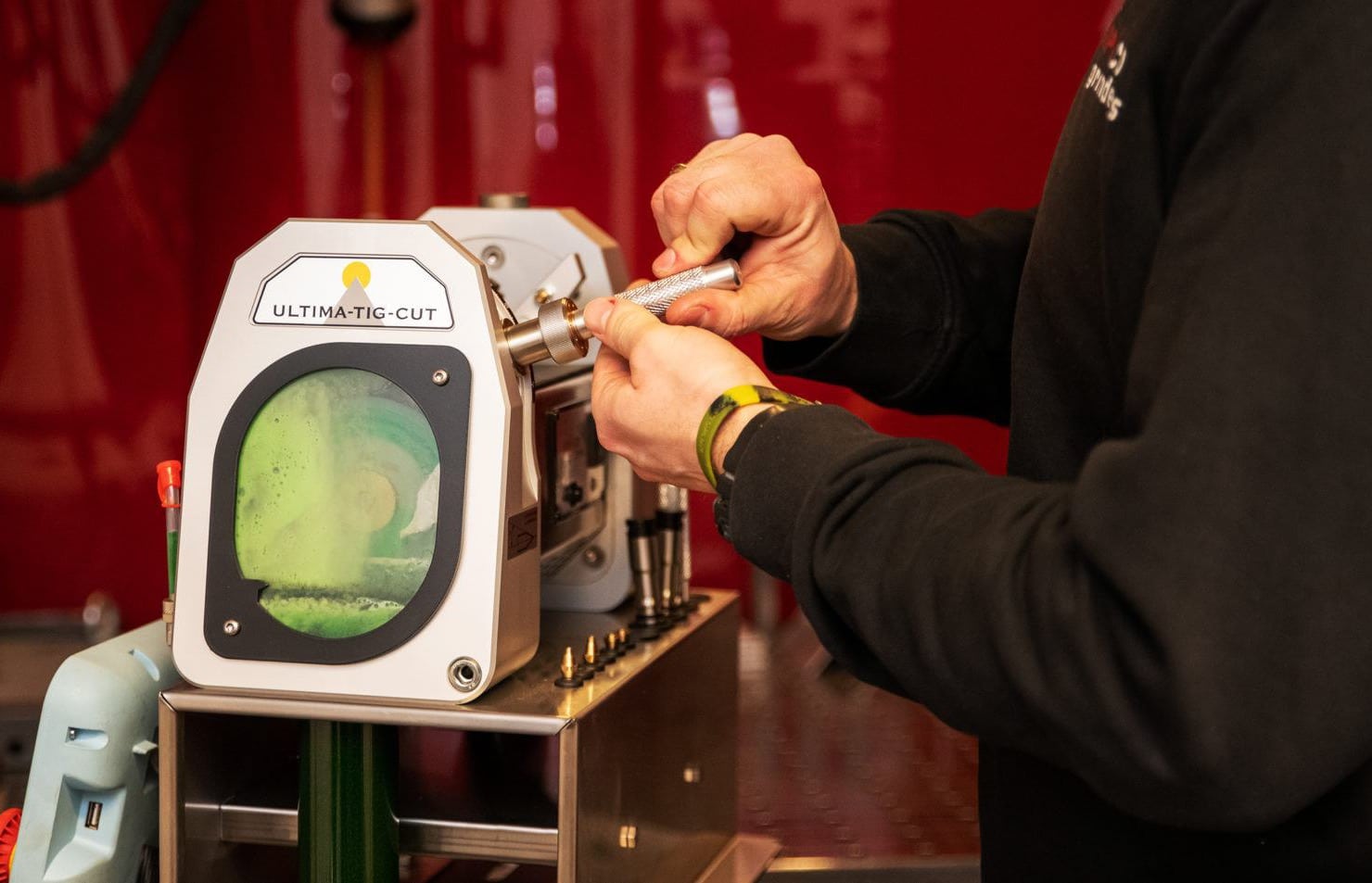
A reliable TIG welding machine, a comfortable torch, shielding gas, welding gloves, and a suitable helmet form the core of a TIG welding setup. But one piece of TIG welding equipment deserves just as much attention. And that is the tungsten tip grinder.
How you prepare your tungsten electrode can directly affect your welding results. The shape, angle, and surface finish of your tungsten electrode influence arc stability, weld penetration, and bead appearance. Your grinding method also affects how effectively you control exposure to grinding dust.
In this guide, we’ll take you through the essential equipment, explain how electrode preparation supports weld quality, and show what exactly to look for when assessing a TIG weld.
What is TIG Welding and How Does it Work?
TIG welding is short for Tungsten Inert Gas welding and formally known as Gas Tungsten Arc Welding (GTAW). This welding method uses a non-consumable tungsten electrode to establish an arc with the workpiece. An inert shielding gas, commonly argon, protects the electrode and weld pool from atmospheric contamination.
When you weld manually, one hand controls the torch while the other feeds a separate filler rod when the joint requires additional metal. You can also weld without filler in applications where the base materials can be joined directly. This process is also known as autogenous welding.
TIG welding gives you fine control over the heat input and weld pool behavior. It makes it suitable for applications, such as:
- Thin-gauge materials, such as sheet metal, tubing, and exhaust systems.
- High-integrity components, including aerospace parts, pressure vessels, and food-processing equipment.
- Non-ferrous metals, including aluminum, titanium, and magnesium alloys.
- Visible welds, such as those on bicycle frames and decorative metalwork, where appearance matters alongside structural performance.
To achieve consistent results, you need more control of the torch and filler material. Arc initiation, gas coverage, tungsten geometry, and filler placement can all influence the result of your weld.
The Essential TIG Welding Equipment Checklist
You can build your setup around these five equipment categories. Alongside them, plan for workpiece preparation, secure fixturing, a reliable work return connection, and suitable welding fume controls.
1. The TIG Welder (Power Source)
Choose a tig welding machine that matches your materials, thicknesses, and workload. Depending on your application, look for:
- AC capability for conventional TIG welding of aluminum and magnesium, and DC capability for materials such as steel, stainless steel, and titanium.
- An adjustable amperage range and duty cycle suited to your work.
- High-frequency or lift-arc starting.
- Pulse capability when the application benefits from controlled current pulses.
- A compatible foot pedal or torch-mounted current control if you need to adjust amperage while welding.
2. Torch and Consumables
Your TIG torch holds and positions the tungsten electrode, while directing gas around the weld area. A typical torch assembly includes the torch body, collet, collet body or gas lens, back cap, ceramic cup, and tungsten electrode.
To keep your setup ready for different welding tasks, make sure you have the following available:
- Collets and collet bodies matched to your tungsten diameter.
- Ceramic cups or nozzles sized for the required shielding coverage.
- Gas lenses where the application benefits from more uniform gas flow.
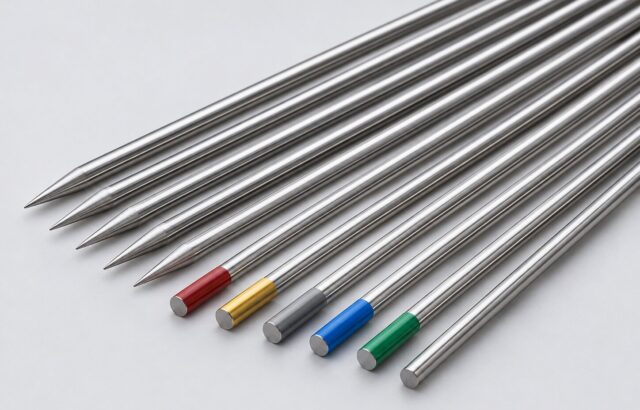
- Tungsten electrodes in a grade and diameter suited to the current type, amperage, and application.
- Filler rods matched to the base material and welding procedure, where required.
Pay particular attention to the tungsten electrode you choose, since electrode grades have different operating characteristics and handling considerations. For instance, lanthanated, ceriated, and thoriated electrodes have different operating characteristics and handling considerations.
Therefore, your choice should reflect the welding process and application that you’re working with.
3. Shielding Gas Equipment
Your shielding gas protects the tungsten electrode and weld pool from atmospheric contamination while you weld. To maintain consistent gas coverage, your setup should include:
- A suitable shielding gas cylinder, commonly argon, secured against falling.
- A compatible regulator and flowmeter.
- Gas hoses and fittings in good condition.
- Back-purge equipment where the material and joint require root-side protection.
- Additional shielding equipment for reactive materials such as titanium, where the procedure requires it.
Set gas flow to suit the cup, joint, and working conditions. Excessive flow and too much gas can create turbulence and compromise shielding by disrupting the shielding coverage you are trying to maintain.
4. Personal Protective Equipment (PPE)
Your personal protective equipment should protect you from heat, radiation, sparks and other hazards associated with TIG welding. Make sure your PPE matches the work you are carrying out includes the following.
- A welding helmet with a suitable shade range and low-amperage sensitivity for TIG welding.
- Welding gloves that provide protection while allowing precise torch and filler control.
- Flame-resistant clothing that covers exposed skin.
- Safety glasses under the helmet.
- Suitable protective footwear.
You should assess ventilation and respiratory protection separately, as your welding helmet does not protect you from exposure to welding fumes or grinding dust. So, if you prepare your tungsten electrodes in the same workspace, make sure your setup includes dust control.
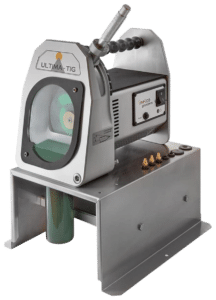
5. The Tungsten Tip Grinder
A tungsten grinder for TIG welding helps make electrode preparation consistent. Select one that provides repeatable angle settings, accurate tip centering, longitudinal grinding, and appropriate dust control.
You should treat the electrode preparation as a natural part of the welding process. A repeatable setup reduces variation before you strike the arc.
Dedicated Tungsten Grinders vs. Freehand Grinding
You can sharpen a tungsten electrode using an open bench grinder or belt sander. However, freehand grinding makes tip geometry harder to repeat, and a shared abrasive surface can introduce contamination.
If you use a dedicated grinder, it will give you greater control over the angle and finish. It also makes it easier to prepare your electrodes more consistently, and reduce unnecessary material loss.
Why is Tungsten Electrode Grinding Geometry Important?
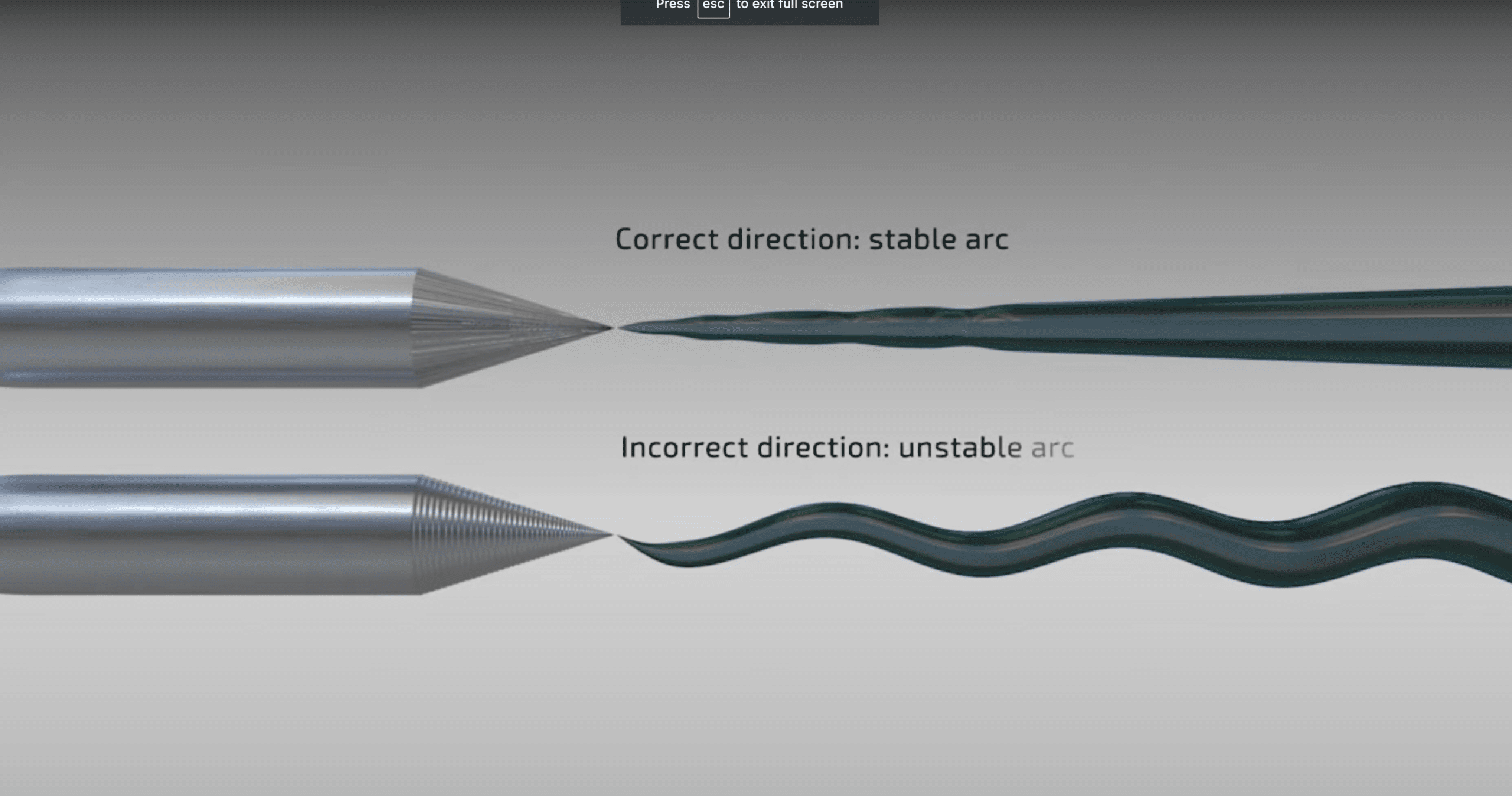
The geometry of your tungsten tip influences arc shape, starting behavior, and penetration. In DC TIG welding, a sharper tip generally produces a broader arc and shallower penetration, while a larger included angle can produce a narrower arc and deeper penetration.
The result will also depend on factors such as amperage, arc length, electrode diameter and tip truncation. You should therefore choose the geometry based on the welding application rather than assuming the sharpest point will give you the best weld. At higher currents, for example, a small flat at the tip can help reduce tip erosion and prolong the service life of the tip before re-grinding is neccessary.
Keep the tip centered and grind longitudinally, along the electrode’s length. Inconsistent angles, contamination, and circumferential grinding marks can contribute to arc instability. We explain the preparation process more in depth in our article “The Value of Precise Grinding of Tungsten Electrodes”.
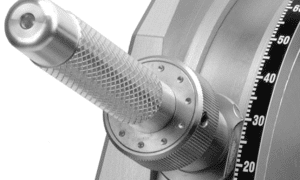
The Grinding Angle Adjustment.
Using a dedicated tungsten electrode grinding machine helps you reproduce the selected geometry without relying on freehand control. For more practical guidance, read “5 Pro Tips for Maintaining Top-Notch Tungsten Grinding Quality”.
If you want to compare grinding methods, continue reading our article: “Why Using an Open Belt Grinder is Costly and Inefficient Compared to the Ultima-TIG Grinder”.
Why Can Grinding Be Considered a Health and Safety Issue?
Grinding tungsten electrodes generates fine particles. Without effective controls, those particles can enter the workshop air and expose operators and nearby workers.
Thoriated electrodes require particular care because they contain thorium oxide, a radioactive substance. Inhaling or ingesting dust from these electrodes creates an internal exposure risk, as explained in TWI’s guidance on thoriated tungsten electrodes.
To reduce your exposure, choose a tungsten electrode grinding tool with effective dust control. Depending on the design, this may involve enclosed wet grinding with particle collection or dry grinding with suitable filtration and extraction. For example, the Ultima-TIG® uses wet grinding, a sealed grinding chamber, and a collection container.
Whichever system you use, make sure you maintain the system and handle collected waste according to the manufacturer’s instructions and applicable requirements. Dust controls reduce exposure, but their effectiveness depends on correct use and regular maintenance.
Read more in “Mitigating Health Risks in Tungsten Electrode Grinding for Welders” and “Tungsten Electrodes’ Impact on Health & Safety”. For more guidance on handling the material after grinding, continue to read: “What to Do with Your Tungsten Waste”.