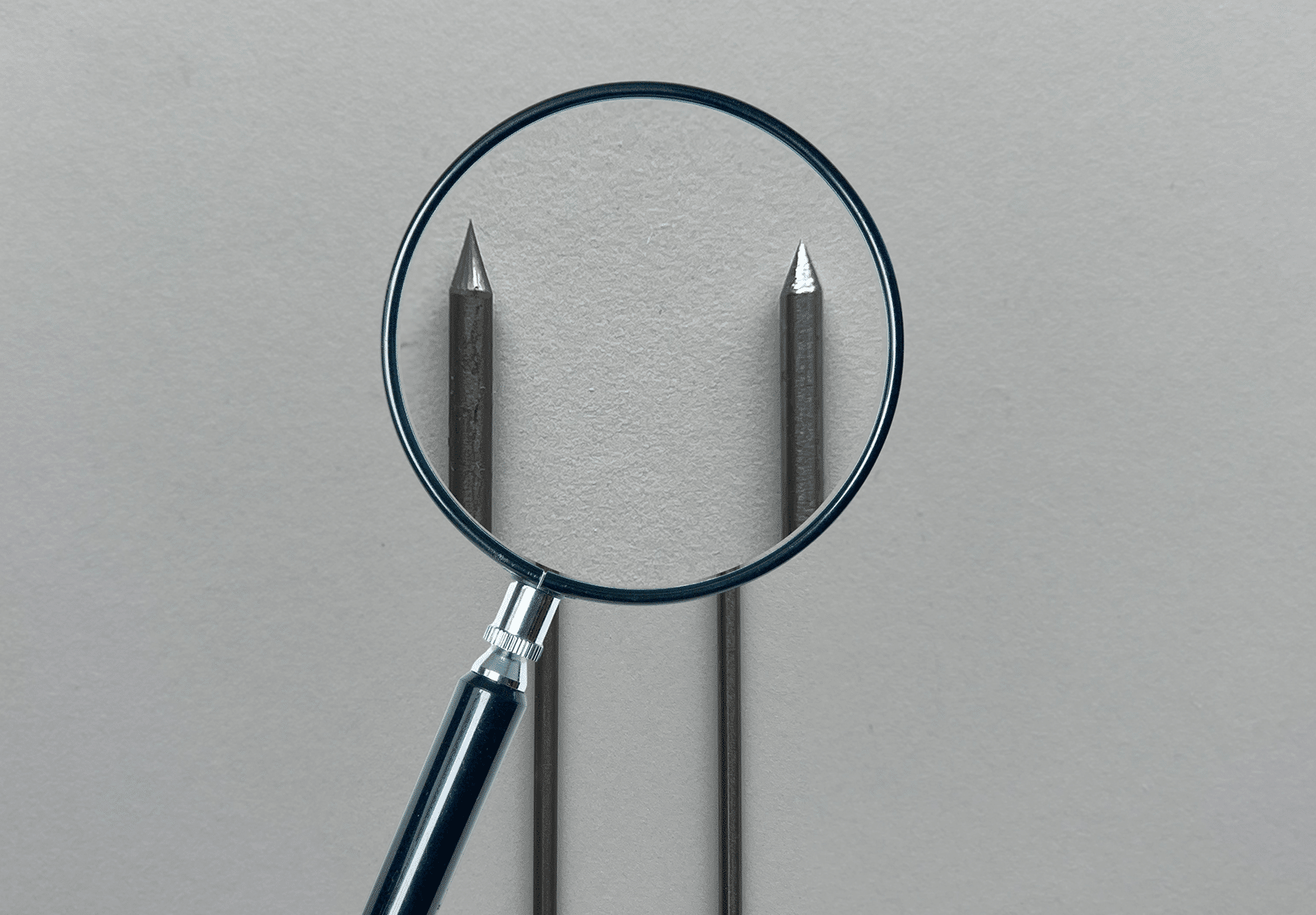
Even small differences in preparation can influence welding performance. An incorrect grinding angle, a contaminated tip or inconsistent grinding marks can make it harder to maintain a stable arc and achieve repeatable results.
At Inelco Grinders, we specialise in equipment for tungsten electrode preparation. Here, we share the following five practical tips to help you achieve consistent grinding quality, reduce electrode waste and maintain a safer working environment.
1. Grind Your Tungsten Electrode Before Welding
A correctly ground tungsten electrode makes arc ignition easier than a flat, factory-cut end and helps establish a stable, predictable arc.
Prepare the electrode to suit your welding application. Follow the electrode and welding equipment manufacturers’ recommendations, particularly when preparing electrodes for AC or DC welding.
Inspect the tip before use and regrind it whenever contamination, wear or damage affects its condition. Regular inspection and preparation help maintain consistent welding conditions and prevent problems caused by a damaged electrode.
2. Choose the Right Tip Geometry:
The tip angle affects arc shape and weld penetration. A fine point supports low-current arc ignition but can deteriorate under higher thermal loads.
A truncated tip has a small flat at its end, helping reduce the risk of melting or tip breakage, particularly at higher currents. Read more about when to truncate the tip .
Choose the tip angle and flat size according to the electrode diameter, welding current and application. Different tungsten electrode sizes support different current ranges, but diameter alone does not determine the correct grinding angle.
Taper length also matters. At a given diameter, a longer taper produces a sharper included angle, while a shorter taper produces a blunter angle. Follow your welding procedure and equipment recommendations to achieve consistent results.
Want to know more about the health risks of grinding dust? Then continue to read our article: The health risks of tungsten grinding dust
3. Grind Your Electrode in the Longitudinal Direction
Grind lengthwise so the grinding marks run along the electrode towards the tip. Longitudinal grinding supports a stable arc, while crosswise marks can contribute to arc wander.
Keep the tip centred and maintain a uniform finish around the taper. An uneven tip can affect arc behaviour, even when the grinding angle is correct.
Always use a dedicated grinding surface to reduce contamination from other metals.
4. Select the Right Grinder and Grinding Wheel
Safety first! Avoid conventional grinders, as Tungsten dust, when combined with other metals, can be carcinogenic. Choose a Tungsten grinder to contain the dust and keep your workspace free from harmful particles. Safety meets efficiency with the right tool.The choice of grinding equipment affects tip quality, consistency and workplace safety. General-purpose bench and belt grinders can introduce contamination and make it harder to achieve repeatable grinding angles.
When choosing the best grinding wheel for tungsten electrodes, consider the complete system. A dedicated grinder with a diamond wheel, controlled angle adjustment and effective dust collection supports consistent preparation.
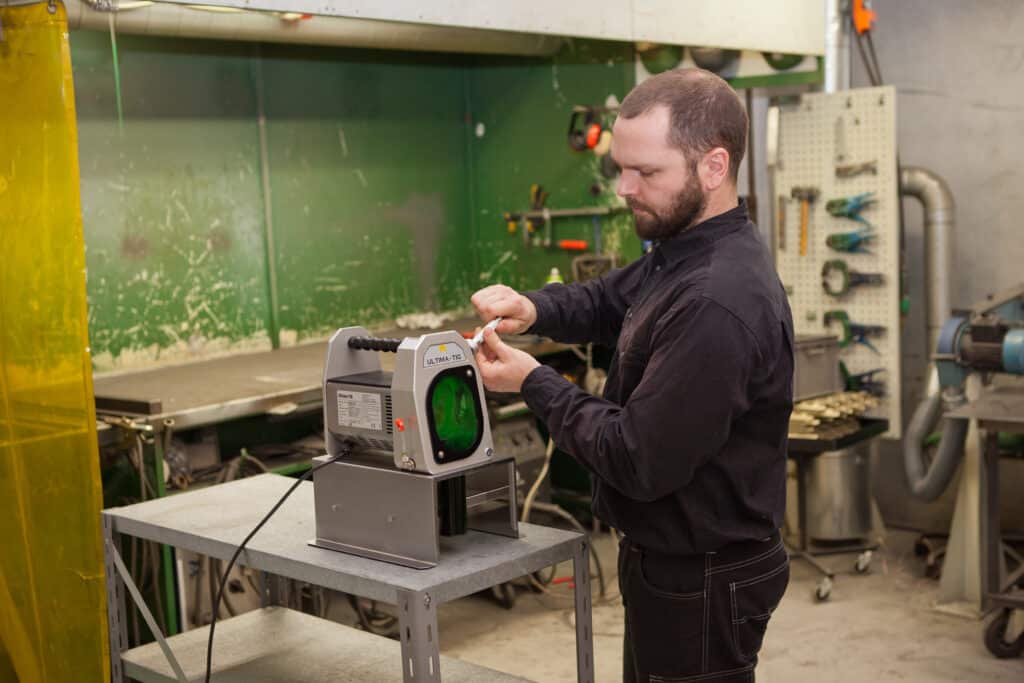
The Ultima-TIG® combines these features with an electrode holder that keeps the tip centred. Its enclosed wet-grinding system helps control heat and contain grinding residue.
Learn more about the health risks of tungsten grinding dust and why open belt grinders can be costly and inefficient .
5. Don’t Snap Off a Contaminated Tip
If your tungsten electrode touches the weld pool, remove the contamination before continuing. Snapping off the tip can cause longitudinal splitting and waste usable material.
Minor contamination can often be removed through careful regrinding. For more extensive contamination, cut off the affected section using dedicated equipment with an enclosed cutting chamber.
Preserving usable electrode length helps reduce replacement costs, regardless of the tungsten electrode price.
The Ultima-TIG®-Cut combines wet grinding with an enclosed cutting module and adjustable cutting length, allowing operators to remove contaminated sections and prepare a new tip using the same machine.
Only reuse shorter electrodes if they meet the minimum length requirements of your grinder, electrode holder and welding torch.
In conclusion, grinding your Tungsten is more than just a routine, it’s a craft that demands precision, safety, and expertise. By incorporating these expert tips into your grinding process, you’re not just sharpening an electrode; you’re honing a key element for welding excellence. Improve the Tungsten grinding and watch your welding quality follow.