
Recently, we visited iD gGmbH in Offenburg together with our partner Wenk Schweißtechnik to see how their Tungsten electrode grinding process has evolved over time. The automated solution continues to improve productivity, safety, and workplace inclusion.
Supporting workplace inclusion
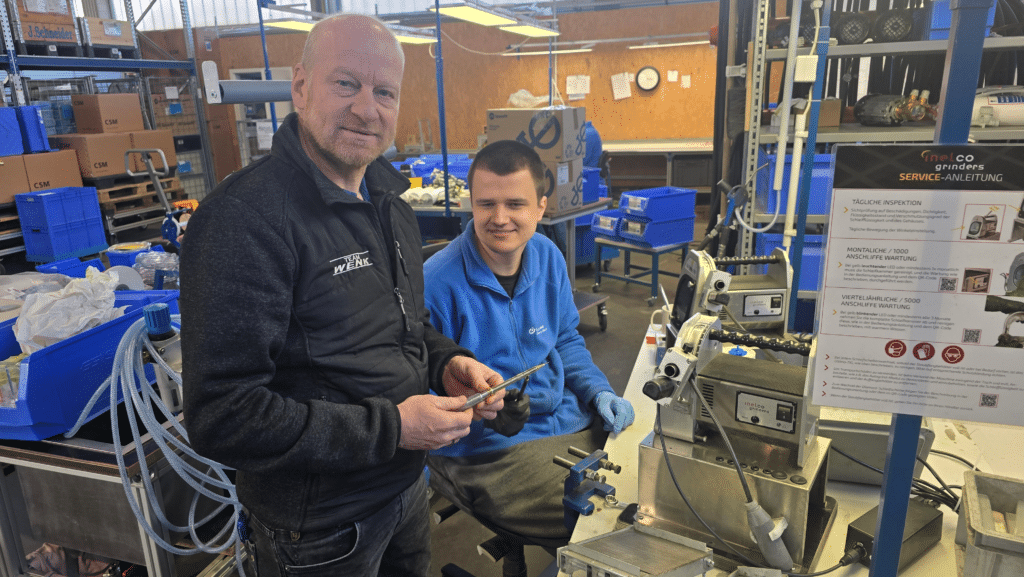
iD gGmbH is committed to workplace inclusion for people with disabilities and is part of Lebenshilfe Offenburg-Oberkirch. For more than 50 years, the organization has supported individuals in participating in working life through vocational training and meaningful employment.
In the “Production and Assembly” department, employees manually ground approximately 80,000 Tungsten electrodes per year for an external customer. Each electrode was previously ground on both ends using a modified open belt grinder, which was a task that was demanding both in terms of motor skills and occupational health and safety.
Read more about iD gGmbH in their website here.
Challenges of manual grinding
Manual grinding presented several challenges:
– Exposure to grinding dust and noise
– Increased physical strain and higher risk of injury
– Difficulty achieving consistent, reproducible results at such high volumes
These challenges clearly demonstrated the need for a safe, controlled, and efficient grinding process.
Implementing an automated solution
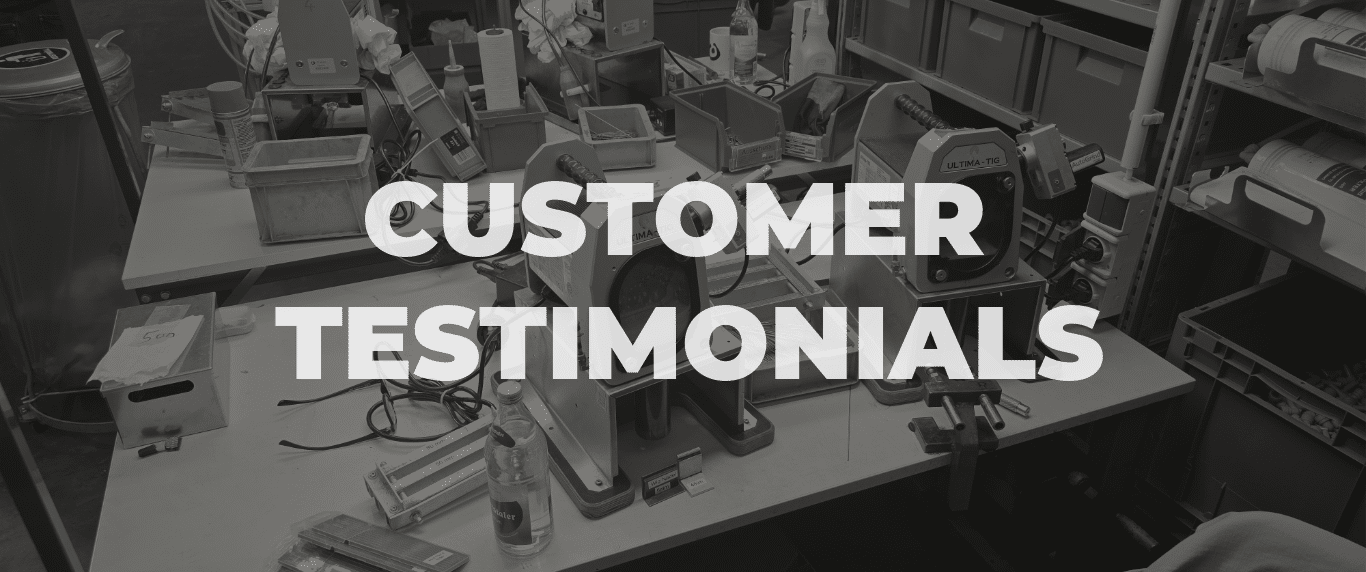
Together with our partner Roland Großmann from Wenk Schweißtechnik in Binzen, we initially implemented a solution consisting of two Ultima-TIG® wet grinders in combination with the AutoGrind Digital module, enabling an automated grinding process. Today, five such systems are in operation at the facility.
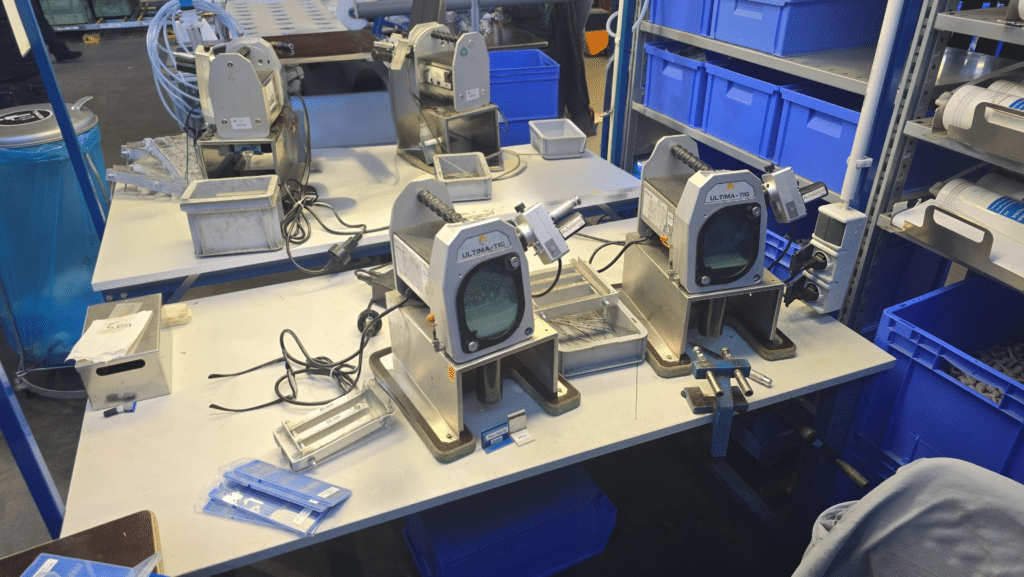
The results were immediate:
– Consistent grinding quality
– Reproducible grinding angles
– Significantly increased capacity
– Completely eliminated dust exposure
– Less physical strain and reduced injury risk
– A stable and predictable production process
The enclosed grinding console completely prevents contact with the grinding disc and avoids the release of dust particles, as the grinding and cooling liquid binds the grinding dust.
At the same time, the previously dry grinding process was converted into a wet grinding process, resulting in extended electrode service life.
The project was successfully completed, with both iD gGmbH and their end customer achieving clear benefits in workflow, safety, and overall performance.
Optimizing the workplace
Over time, the team at iD gGmbH has optimized the workspace and handling around the grinding stations to better suit the needs of employees with disabilities. These adjustments make the process easier, safer, and more accessible for the operators.
A long-term partnership
The collaboration with iD gGmbH continues to develop as the automated Tungsten electrode grinding process is refined and improved over time. This solution enhances precision, protects employees, improves working conditions, and supports sustainable production.