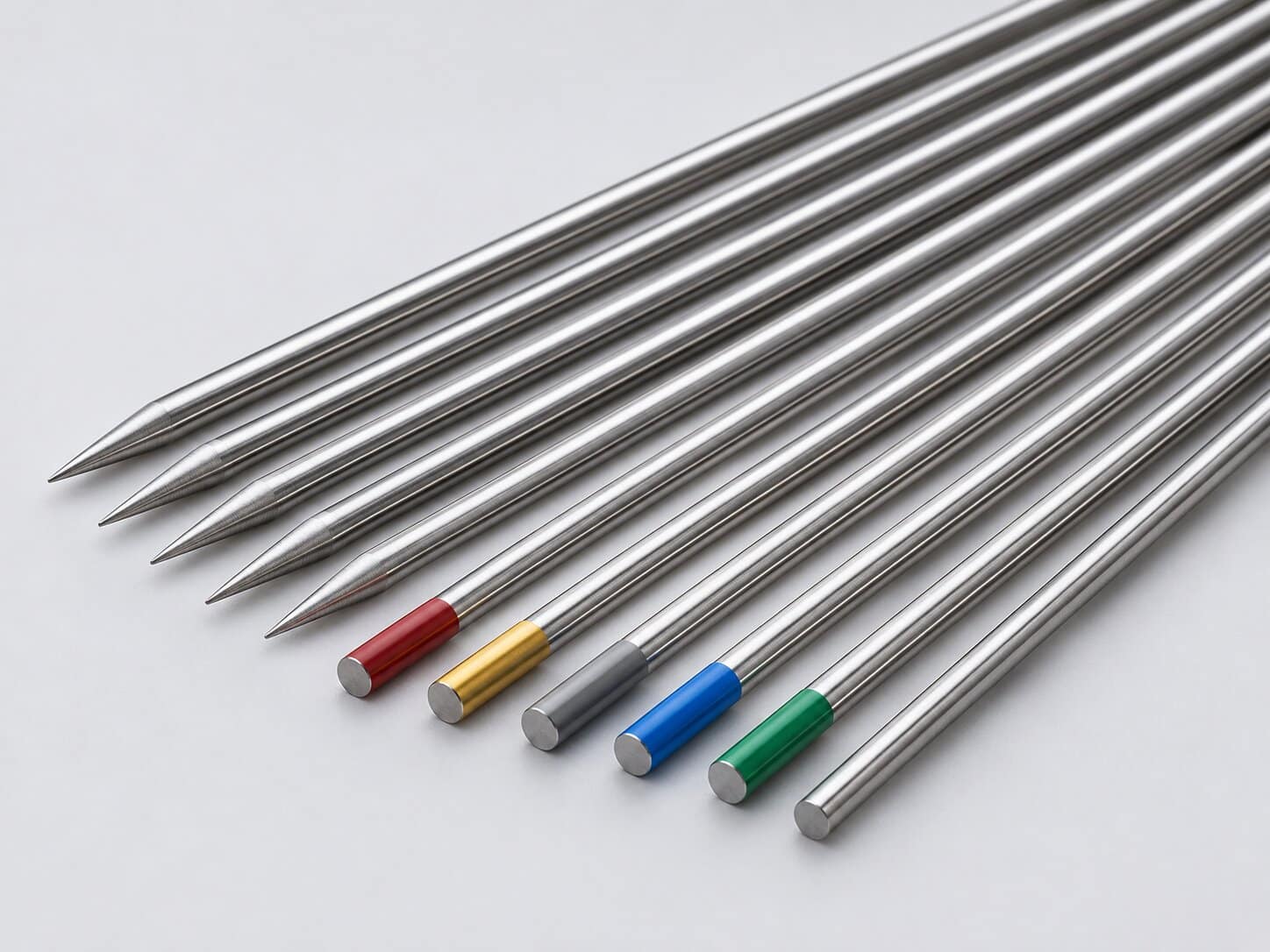
The color marking on a tungsten electrode helps you identify its composition. Green is pure tungsten. Yellow and red are thoriated. Grey is ceriated. Black, gold and blue are lanthanated. Brown and white are zirconiated. Purple is mostly used for rare-earth blends. The color coding can vary depending on the manufacturer.
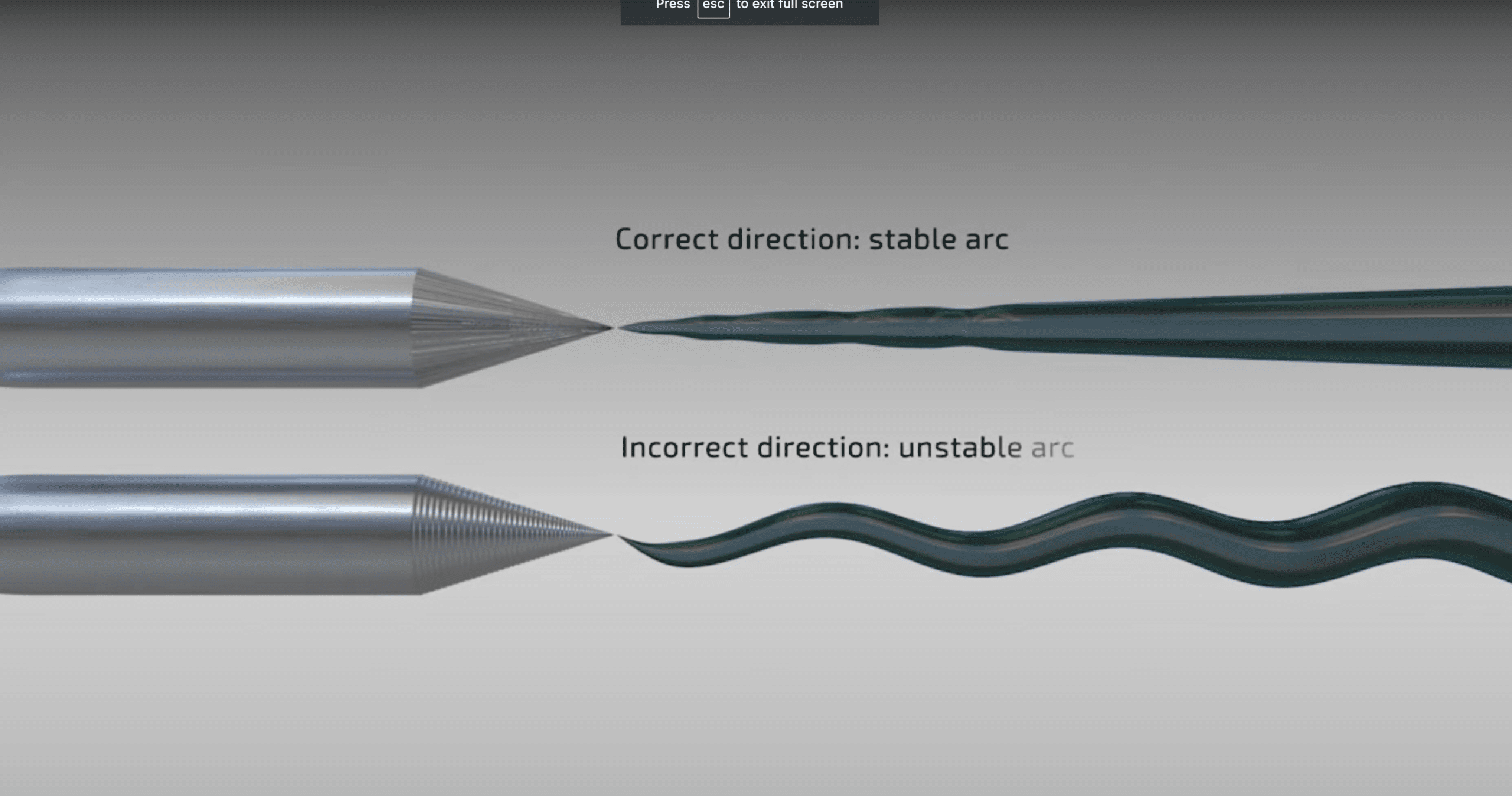
Choosing the right tungsten type is important for your weld. Just as important is how you prepare your electrode tip, since it influences how the arc starts, how stable it remains and how consistently the electrode performs.
In this guide, we’ll explain the different tungsten electrode types and colour codes, what they are typically used for and how to prepare them correctly for TIG welding.
Electrode Types and Color Chart
Below you will find the different electrode types and a color chart for an easy overview. Use it before you start grinding.
| Colour | Electrode type | ISO | Oxide content | AC/DC |
|---|---|---|---|---|
| Green | Pure tungsten | WP | None, min. 99.5% tungsten | AC |
| Yellow | Thoriated | WT10 | Thorium oxide, 0.8-1.2% | DC |
| Red | Thoriated | WT20 | Thorium oxide, 1.7-2.2% | DC |
| Grey | Ceriated | WC20 | Cerium oxide, 1.8-2.2% | AC/DC |
| Black | Lanthanated | WL10 | Lanthanum oxide, 0.8-1.2% | AC/DC |
| Gold | Lanthanated | WL15 | Lanthanum oxide, 1.3-1.7% | AC/DC |
| Blue | Lanthanated | WL20 | Lanthanum oxide, 1.8-2.2% | AC/DC |
| Brown | Zirconiated | WZ3 | Zirconium oxide, 0.15-0.50% | AC |
| White | Zirconiated | WZ8 | Zirconium oxide, 0.70-0.90% | AC |
| Purple* | Rare-earth blend | Varies | Combination of rare-earth oxides varies by manufacturer | AC/DC |
*Rare-earth blends: The exact composition and colour coding can vary by manufacturer. Always check the manufacturer's electrode specification. In general, always confirm the electrode classification and manufacturer specification before use.
Read more on “The value of precise grinding of Tungsten electrodes”.
What do WT, WL, WC and WZ Mean?
A system you might encounter is ISO 6848, the international standard for tungsten electrodes. Or you may even see them classified as AWS, from the American Welding Society.
For example, a red 2% thoriated tungsten electrode can be identified as EWTh-2 under the AWS system and WT20 under ISO 6848. So, these are different classification codes for the same type of electrode.
- WP = pure tungsten
- WT = tungsten with thorium oxide
- WL = tungsten with lanthanum oxide
- WC = tungsten with cerium oxide
- WZ = tungsten with zirconium oxide
The number behind indicates the approximate amount of oxide in the electrode.
- WT20 = approx. 2% thorium oxide
- WL10 = approx. 1% lanthanum oxide
- WL15 = approx. 1.5% lanthanum oxide
- WL20 = approx. 2% lanthanum oxide
This also explains why two electrodes can have different colors even though they contain the same oxide. Gold and blue electrodes, for example, are both lanthanated tungsten, but they contain different concentrations of lanthanum oxide.
Tungsten Electrode Types Explained by Color
All tungsten electrodes follow the same basic grinding principles. What changes is how they perform across different currents, polarities and welding applications.
- Pure tungsten (green) contains no oxide additive and is traditionally used for AC welding of aluminium and magnesium. Oxide-doped alternatives are more common with modern equipment.
Grinding note: Grind longitudinally and select the tip geometry for the AC application.
- Thoriated tungsten (yellow and red) is traditionally used for DC welding of steel and stainless steel because of its reliable arc starting and stable tip. It contains radioactive thorium, which makes control of grinding dust particularly important. Read more about the health risks in tungsten electrode grinding.Grinding note: Grind longitudinally using dedicated equipment. Enclosed wet grinding helps reduce airborne dust exposure.
- Ceriated tungsten (grey) performs well at lower currents, making it suitable for thin materials and precision welding. It can be used with both AC and DC.
Grinding note: Grind longitudinally and maintain a consistent angle from electrode to electrode.
- Lanthanated tungsten (black, gold and blue) is a versatile, non-radioactive alternative to thoriated tungsten. Different colors indicate different lanthanum levels, with blue commonly used across both DC and modern inverter AC applications.
Grinding note: Grind longitudinally with a controlled, repeatable angle. - Zirconiated tungsten (brown and white) is primarily used for AC welding, particularly aluminum and magnesium. It performs well where a stable rounded tip is required.Grinding note: Grind longitudinally and select the final tip geometry for the AC application.
- Rare-earth electrodes (purple) use manufacturer-specific oxide blends and can be designed for both AC and DC welding. Their exact composition and characteristics can therefore vary.
Grinding note: Grind longitudinally and follow the electrode manufacturer’s specifications for tip geometry.
Which Tungsten Electrode Should You Use?
The choice depends on factors such as the material, welding current, AC or DC setup, and the characteristics you need from the electrode. You can easily choose by looking at the table at the top of this article.
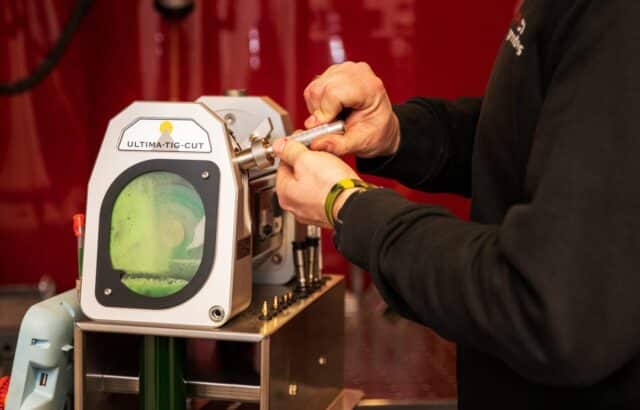
Whichever type you end up choosing, correct preparation is of course essential for consistent performance. At Inelco Grinders, we develop dedicated tungsten grinders that help you achieve controlled angles and repeatable tip geometries across all the different tungsten electrode types.