
At Inelco Grinders, our dedicated tungsten grinders help you remove damaged material and restore the correct tip geometry with precision, while also minimising material waste.
In this article we’ll go through how to sharpen and restore a tungsten electrode, how you identify common causes of damage and regrind the tip correctly. We’ll also cover how to achieve a consistent result with minimal material waste.
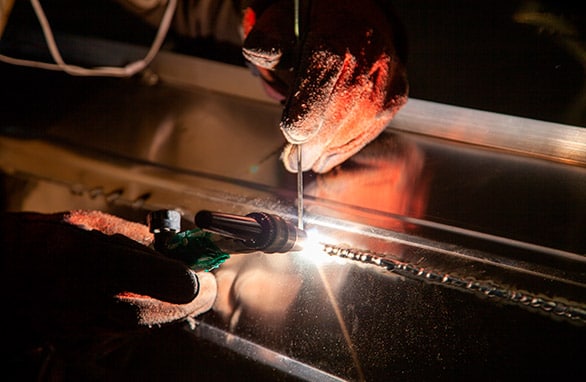
Common Issues That Lead to Electrode Damage
- Interrupted shielding gas supply: An empty cylinder or closed valve leaves the hot electrode exposed to oxidation.
- Dipping the electrode into the weld pool: Contact contaminates the tip and disrupts the arc.
- Insufficient gas afterflow: Ending gas coverage too soon exposes the electrode to oxidation while it cools.
- Contact with filler material: Touching the electrode with the filler wire contaminates the tip and alters arc behaviour.
- Excessive current or unsuitable settings: These can overheat the electrode and accelerate tip deterioration.
These issues can change the electrode’s tip geometry or surface condition. If you can remove the affected material and retain sufficient usable length, regrinding often restores the electrode without replacing it.
Why a Bench Grinder Makes Sharpening Tungsten Harder
Freehand sharpening on a bench grinder or open belt grinder makes it a lot harder to control material removal and reproduce the required tip geometry. Below, we’ve gathered the most common drawbacks.
- Excessive material removal: Uncontrolled grinding shortens electrode life.
- Inconsistent tip geometry: Variations in angle and centring can affect arc stability.
- Airborne grinding dust: Open grinding can release particles into the workspace without adequate dust control.
Wheels used for other metals can also introduce contamination. Read more about the health risks of tungsten electrode grinding, before selecting your own grinding equipment.
Remember, a dedicated tungsten grinder should provide you with controlled angle adjustment and electrode positioning, which makes the repeatable preparation easier.
How to Sharpen a Tungsten Electrode Step by Step
Step 1: Pick the tip geometry first
Decide the angle and the flat before you touch the grinder. If your welding procedure specifies a geometry, use it. If it doesn’t, these are sensible starting points:
| Included tip angle | Arc behavior | Typical use |
| Around 25° | Wider, softer arc, lighter penetration | Thin sheet, cap passes, low current |
| Around 30-35° | Balanced control and penetration | General-purpose DC TIG |
| Around 45° and up | Narrower, more focused arc, deeper penetration | Thicker material, higher current |
A sharper point starts easily at low current but runs hotter at the tip and wears faster. Push it too hard and it can shed tungsten into the weld. A blunter point handles more current and lasts longer.
Taper length: a common rule is to keep a ground taper about twice the electrode diameter.
Step 2: Cut Off the Contaminated Portion
You should always inspect the electrode to assess the extent of the damage. If the tip is heavily contaminated or damaged, use the Ultima-TIG®-Cut to cut off the affected portion before regrinding.
Do not snap or shear the electrode, since this can cause longitudinal splitting. Cutting in an enclosed chamber helps contain particles and grinding dust.
Step 3: Regrind at the Correct Angle
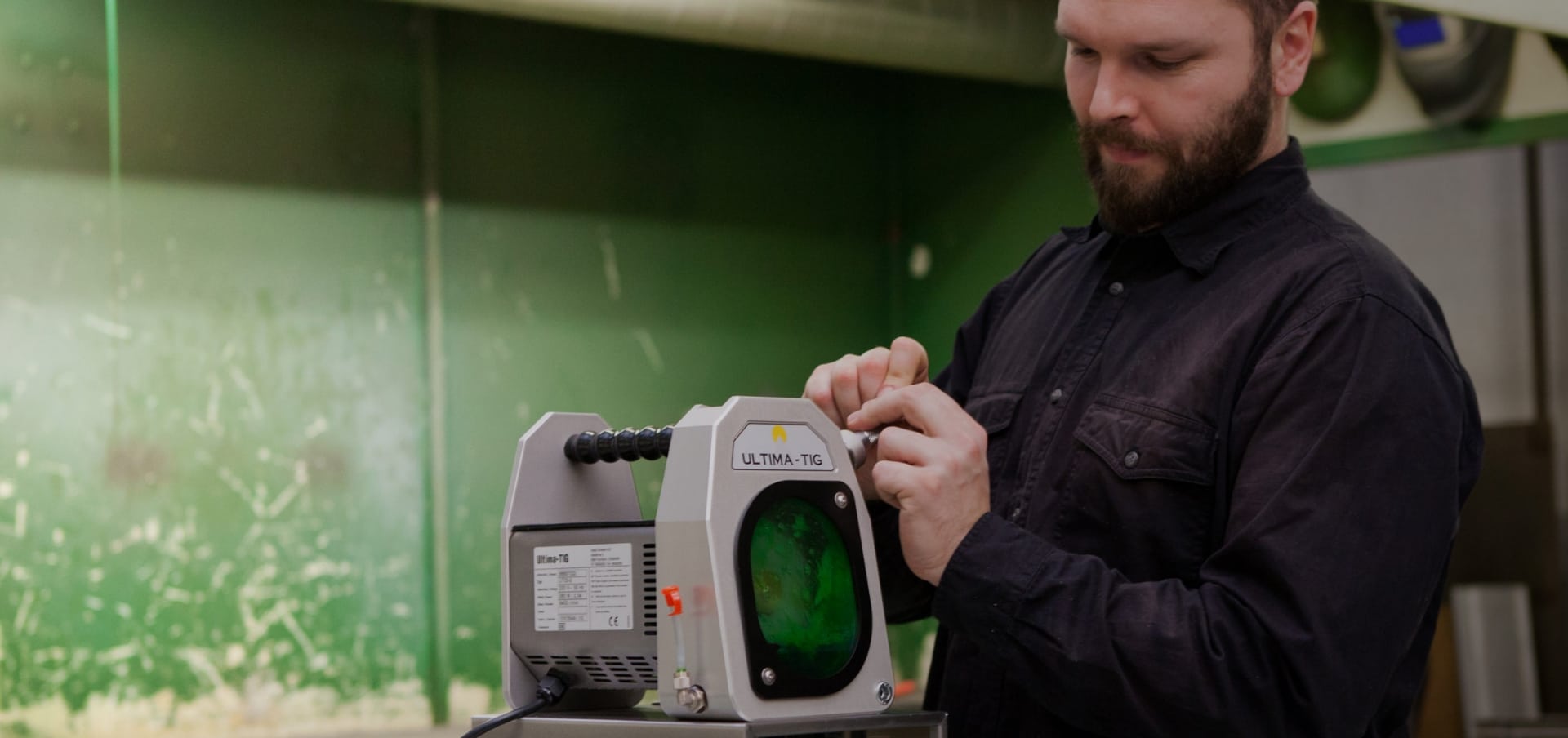
You can use the Ultima-TIG® Tungsten Grinder to restore the required angle. Its 7.5°-90° grinding-angle settings correspond to included electrode tip angles of 15°-180°, with 180° representing a flat end.
Select the angle specified for your welding application. Secure the electrode in the holder, set the stick-out and follow the grinder’s operating instructions.
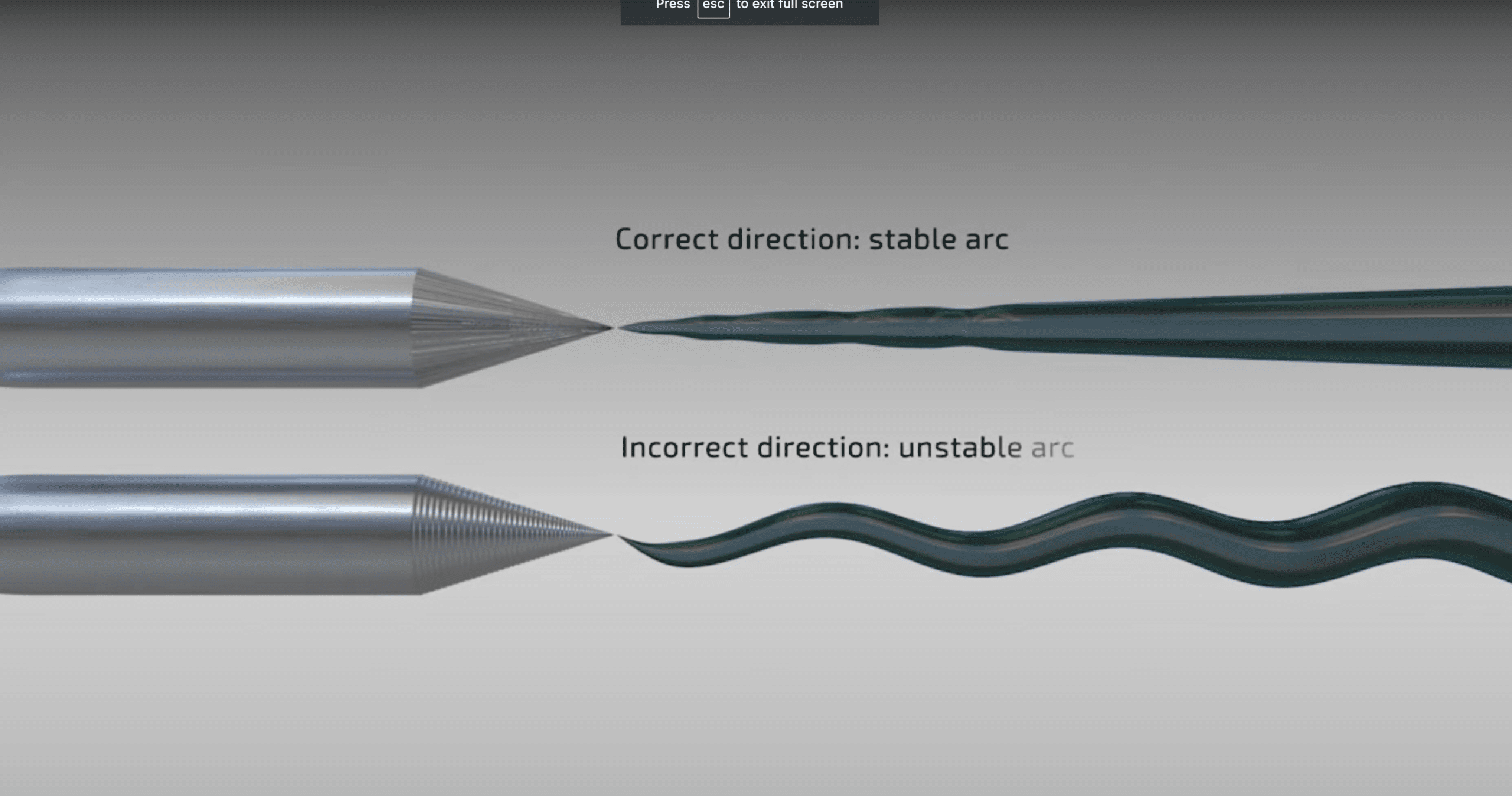
Grind lengthwise, in the longitudinal direction, so the grinding grooves run towards the tip rather than around it. Circumferential grinding marks can contribute to arc wandering.
For guidance on matching tip geometry to your application, see our 5 pro tips for maintaining top-notch tungsten grinding quality.
Step 4: Add the flat and inspect the tip
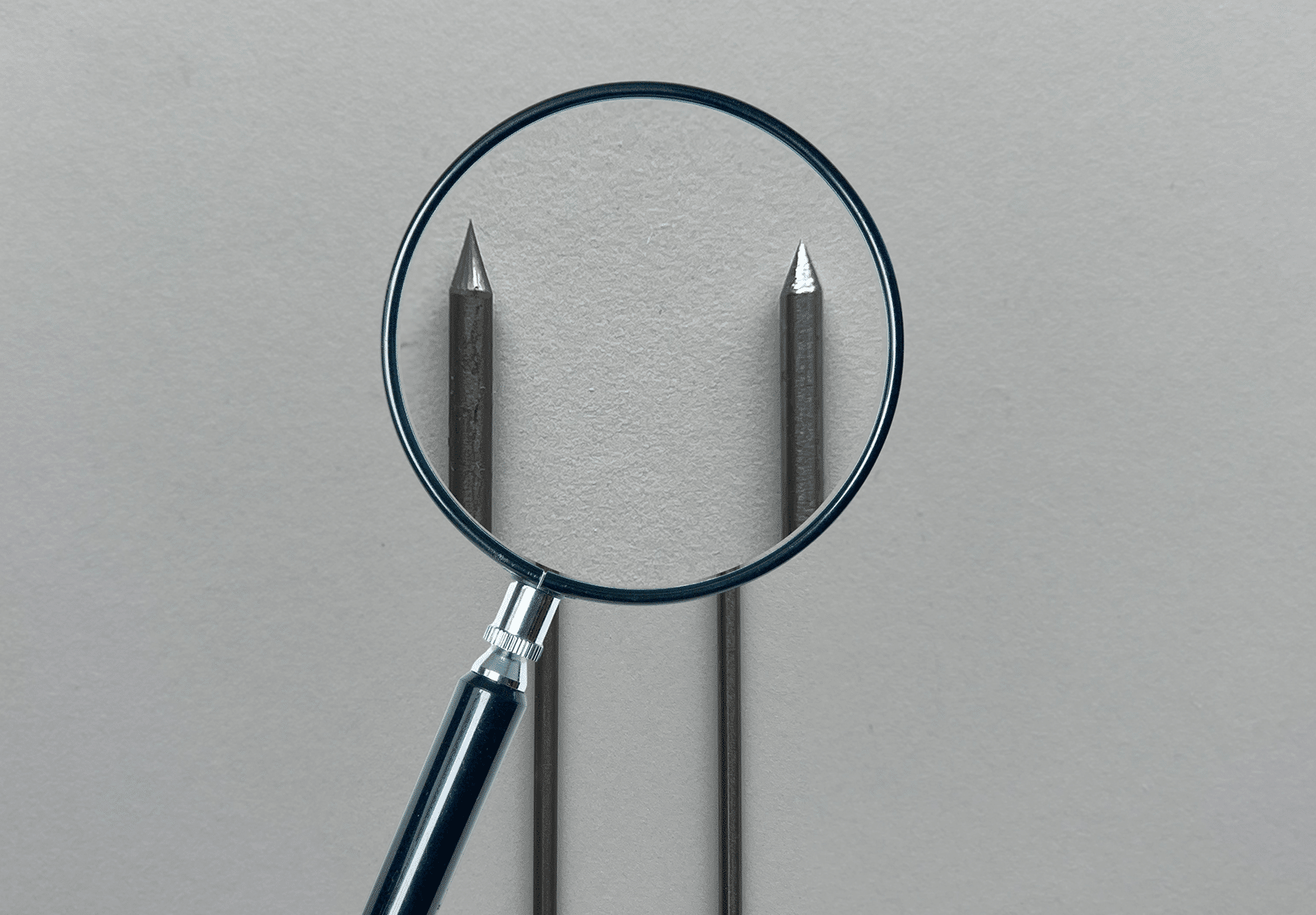
If your geometry calls for a flat, add it now. Then check the tip in good light, or under magnification if you have it. You’re looking for:
- a centered point (roll the electrode and watch the tip, it shouldn’t wobble)
- an even, smooth surface with lengthwise marks only
- no discoloration, chips, or cracks
- the flat size you intended
If it passes, it’s ready. For habits that keep results consistent from one electrode to the next, see 5 pro tips for maintaining top-notch tungsten grinding quality.
Step 5: Choose the Right Tip Geometry
Confirm the required tip geometry before you start grinding, then finish the point or add a flat as specified by your welding procedure. A sharp point can support arc initiation at low current, but it is more susceptible to overheating at higher current.
A truncated tip has a small, controlled flat at its end. This can reduce the risk of tip melting and support repeatable performance in orbital and automated welding.
You should treat the tip angle and flat diameter as separate parameters. Keep in mind that they both influence the welding performance. Review the benefits of a truncated electrode tip when selecting the geometry for your application.
Sharpening Tungsten for AC vs. DC
Everything above assumes DC TIG, which covers steel, stainless, and most other metals. AC, used mainly for aluminum, is different.
On older transformer machines, the usual approach is to skip the sharp point. Grind a short chamfer (around 45°) or leave the end flat, then let the AC arc form a rounded cap, or “ball,” on the end. A cap much larger than the electrode diameter means the current is too high for that size. Move up a diameter.
Many modern inverter machines run AC with a pointed or truncated tip instead, because you can tune the balance to keep the tip from balling. Check what your machine’s manufacturer recommends.
Wet vs. Dry Grinding
Both work with the right equipment and dust control. The difference is heat.
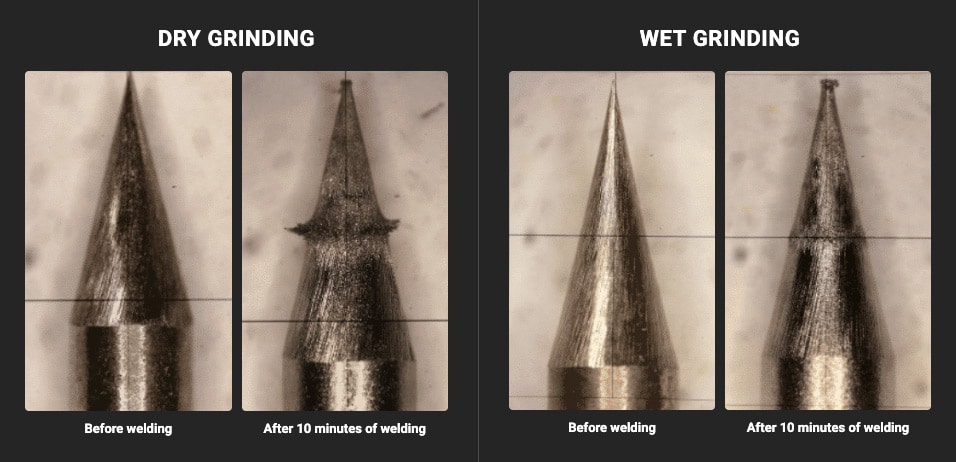
Grinding creates friction, and friction heats the tip. With dry grinding, heavy pressure or long passes can overheat the electrode and damage the surface before it ever strikes an arc. Wet grinding runs coolant over the disc, which keeps the tip cool and gives a smoother, more even finish. It also traps the grinding particles in the liquid instead of letting them into the air. Read more about our wet vs. dry grinding measurements here.
If you only sharpen occasionally, a dry grinder with good dust extraction is fine. If you sharpen daily, or you run thoriated electrodes, wet grinding is worth it. The value of precise grinding of tungsten electrodes goes further into how angle consistency and surface finish affect arc performance.
Get the Same Tip Every Time
A well-sharpened electrode takes one variable out of your TIG process. The Ultima-TIG® combines wet grinding, an adjustable angle, and a centering holder, so every regrind matches the last one and uses as little tungsten as possible.
Book a free demo of the Ultima-TIG® to see it in action.