How Regular Tungsten Grinder Maintenance Supports the Sustainability Agenda
Our Tungsten grinders sharpen electrodes for TIG-welding, also known as GTAW, including orbital welding applications, as well as plasma welding. Designed for precision, quality, and operator safety, they help prepare electrodes for consistent welding results. However, even durable, reliable machines need regular servicing to maintain their performance.
Maintenance also plays a role in industrial sustainability: preventive maintenance benefits extend beyond equipment reliability to resource conservation, energy efficiency, and CO2 emissions.
Building on the guidance available on our service page and our article on cleaning and inspection routines that extend your grinder’s lifetime, this post explores how regular tungsten grinder maintenance supports sustainability across three areas: resources, emissions, and safety.
Resource Conservation
Regular servicing and maintenance help extend your grinder’s service life and reduce the need for premature replacement. Keeping a machine in use for longer helps conserve the raw materials and energy needed to manufacture and transport a replacement.
Extending the lifespan of your Tungsten grinder also reduces equipment waste. Improper disposal can release harmful materials into the environment, so maintaining existing equipment and handling end-of-life machines responsibly both matter.
The same principle applies to the tungsten electrode waste produced during grinding. You can recycle your tungsten waste through an appropriate recycling route, helping recover valuable material rather than sending it to landfill. Together, equipment maintenance and tungsten recycling support more efficient use of resources.
Inelco Grinders sells approximately 6,000 dust collectors annually in Europe. Each collector contains approximately 800–900 g of grinding dust, with a measured tungsten content of 85–88%. Based on these figures, Inelco estimates 4.1–4.8 tonnes of potentially recoverable tungsten per year.
Reduction of CO2 Emissions Through Preventive Maintenance
A well-maintained Tungsten grinder can help limit unnecessary energy consumption and associated CO2 emissions. Regular servicing supports efficient operation by addressing wear, contamination, and mechanical issues that can affect grinding performance.
This preventive-maintenance benefit is easy to overlook. If a grinder takes longer to prepare an electrode or requires repeated grinding to achieve the correct result, it may use more energy per finished electrode. Addressing the cause helps maintain consistent performance and avoid unnecessary work.
Where the service instructions allow, servicing your machines in-house also avoids the transport emissions associated with shipping equipment elsewhere for repair. The savings depend on the transport distance and method, but on-site servicing can contribute to your efforts to reduce environmental impact.
For a broader look at our sustainability work, read how Inelco Grinders is building its approach to CO₂eq data and ESG reporting.
Estimated CO₂ Impact of Electrodes and the Ultima-TIG®
Extending electrode lifetime and reducing tungsten consumption may also lower emissions associated with producing replacement electrodes. Based on research, product knowledge, and available published data, Inelco Grinders estimates 38 kg CO₂ per kg of tungsten electrodes. Standardised CO₂ footprint data from tungsten electrode manufacturers is not currently available, so this is a preliminary estimate.
Applying that estimate to the 4.1–4.8 tonnes of potentially recoverable tungsten gives an illustrative 155–181 tonnes of CO₂ associated with producing an equivalent quantity of virgin material. This is not a measured CO₂ saving from recycling. Actual savings depend on the recycling process and the extent to which recycled tungsten replaces virgin material.
Inelco Grinders also estimates that producing one Ultima-TIG® accounts for approximately 166 kg CO₂. Emissions during operation depend on electricity use and the number of electrodes ground, so they must be calculated individually. All these figures are preliminary estimates and should not be treated as verified product carbon footprint values.
Safety Benefits of a Well-Maintained Tungsten Electrode Grinder
Sustainability also means protecting the people who operate the equipment. A neglected tungsten electrode grinder can compromise both performance and dust containment. Worn seals, degraded filters where fitted, or a poorly maintained grinding chamber can increase the risk of tungsten dust escaping into the workshop air.
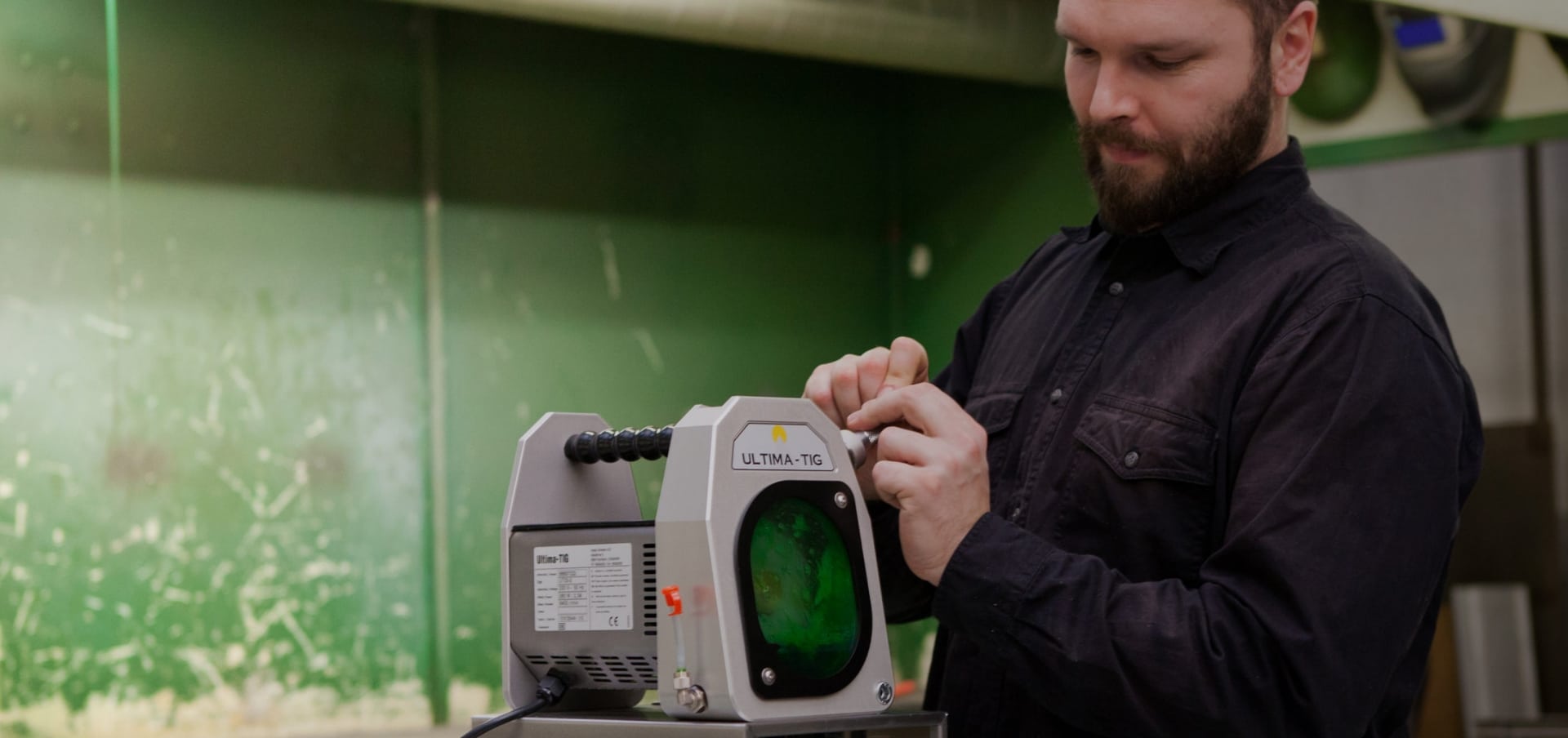
Regular maintenance helps keep these protective systems working as designed. The Ultima-TIG® uses an enclosed grinding chamber, special grinding liquid, and a dust collector to capture hazardous tungsten particles. Maintaining these components according to the service instructions is essential to their performance.
For more information on dust containment and operator protection, read how we help mitigate health risks in tungsten electrode grinding for welders. Effective maintenance and safe grinding practices work together to reduce exposure.
Ultima-TIG®: Built for Low-Waste, High-Precision Grinding
Precision grinding supports resource conservation at the electrode level as well as the machine level. At Inelco Grinders®, we design our Tungsten grinders to remove only the material needed to prepare the electrode, helping reduce tungsten waste and electrode costs.
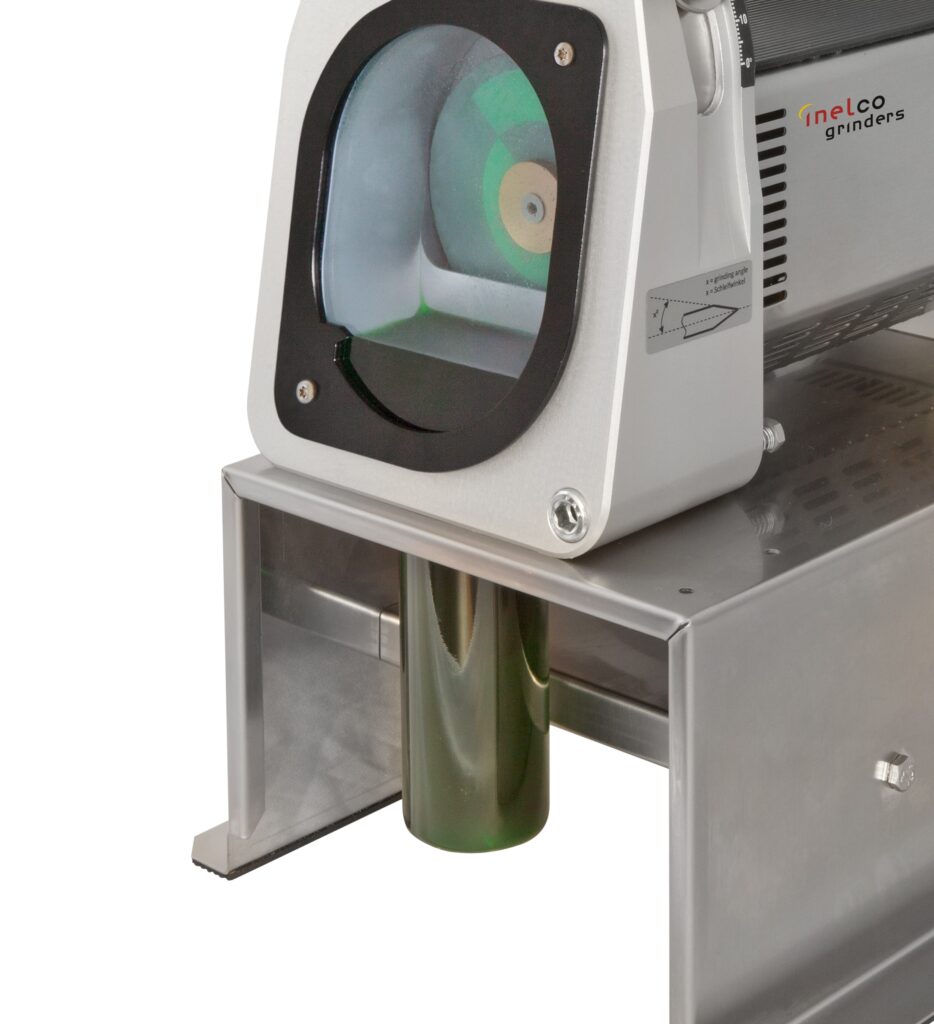
The Ultima-TIG® combines this precision with an enclosed grinding chamber, special grinding liquid, and a dust collector. Together, these features capture hazardous tungsten particles and help limit their release into the working environment. The dust collector supports controlled collection and safe disposal of grinding waste, helping reduce the risk of operators inhaling Tungsten nanoparticles.
Regular servicing helps preserve both grinding precision and dust-containment performance throughout the machine’s service life.
Making Tungsten Grinder Maintenance Part of Your Welding Equipment Strategy
We provide servicing and maintenance support for our products to help keep them performing reliably. Making regular tungsten grinder maintenance part of your welding equipment maintenance program helps extend equipment life, maintain grinding quality, and protect operators.
For practical guidance, read our service and maintenance tips or visit our service page for service instructions, exploded-view drawings, and parts lists.
If you have questions about tungsten grinder maintenance or our Tungsten grinders, contact our team for advice on servicing, parts, and electrode preparation.If you have any questions about our Tungsten grinders, please don’t hesitate to contact us. Our team is always available to help you with all your welding and metalworking needs.